- 1. Understanding Water Soluble Humic Acid: Nature’s Essence of Life
- 1.1. The Formation Process: Nature’s Artistry
- 2. Decoding the Composition and Characteristics of Water Soluble Humic Acid
- 2.1. Complex Chemical Composition
- 2.2. Unique Physicochemical Characteristics
- 3. Mechanisms of Action: Multi pathway Promotion of Plant Health
- 3.1. 1. Enhancing Nutrient Absorption and Utilization
- 3.2. 2. Improving Soil Ecosystem
- 3.3. 3. Enhancing Plant Stress Resistance
- 3.4. 4. Stimulating Plant Growth and Development
- 4. Innovative Applications in Modern Agriculture
- 4.1. 1. Core Component of Smart Fertilizers
- 4.2. 2. Important Support for Organic Agriculture
- 4.3. 3. Powerful Tool for Ecological Restoration
- 4.4. 4. Ideal Material for Precision Agriculture
- 5. Frequently Asked Questions
- 5.1. 1. What are the fundamental differences between water soluble humic acid and regular humic acid?
- 5.2. 2. How do different crops respond differently to water soluble humic acid?
- 5.3. 3. Can water soluble humic acid be mixed with other agricultural chemicals?
- 5.4. 4. How to judge the quality of water soluble humic acid products?
- 6. Scientific Usage Guidelines
- 6.1. 1. Soil Base Application Technology
- 6.2. 2. Topdressing Application Scheme
- 6.3. 3. Foliar Spraying Technology
- 6.4. 4. Seed Treatment Applications
- 7. Future Prospects: The Role of Water Soluble Humic Acid in Sustainable Agriculture
- 8. Conclusion
In today’s era of sustainable agriculture, a gift from nature is quietly transforming our understanding of plant nutrition—water soluble humic acid. This “black gold” not only contains billions of years of Earth’s life memory but also carries the promise for future agriculture. Let’s explore the mysteries of this remarkable substance and understand how it’s revitalizing modern farming practices.
Understanding Water Soluble Humic Acid: Nature’s Essence of Life
Water soluble humic acid (WSHA) is a form of humic acid known for its high water solubility and biological activity. It represents the refined product of long term degradation and chemical transformation of organic matter. When plant and animal residues and microorganisms decompose and reorganize in soil over hundreds or even thousands of years, they form this complex and precious organic substance.
The Formation Process: Nature’s Artistry

The formation of water soluble humic acid is a lengthy and complex natural process. First, plant and animal residues decompose into simple organic compounds through microbial action. Subsequently, these compounds recombine through chemical and biochemical reactions to form structurally complex macromolecular organic substances. Finally, under suitable temperature, humidity, and pH conditions, these macromolecules further transform into biologically active humic acid.
This process resembles nature’s art of winemaking, requiring time precipitation and perfect environmental coordination. Today, we can extract this valuable substance from natural resources such as peat, humus rich soil, weathered coal, and lignite, making it a versatile raw material for agriculture, horticulture, environmental protection, and other fields through modern processing technologies.
Decoding the Composition and Characteristics of Water Soluble Humic Acid

Complex Chemical Composition
Water soluble humic acid is not a single compound but a complex mixture of various organic components including humic acid, fulvic acid, and other organic compounds. Its composition includes:
- Aromatic compounds: Forming the core of humic acid
- Active functional groups(carboxyl, phenolic hydroxyl, etc.): Providing excellent ion exchange and chelation capabilities
- Amino acids and peptides: Directly participating in plant metabolism
- Natural plant hormone analogs: Regulating plant growth and development
- Trace elements: Existing in organic chelated forms for easy plant absorption
Unique Physicochemical Characteristics
- Exceptional Water Solubility
Compared to traditional humic acid, water soluble humic acid has a smaller molecular weight and more functional groups, enabling complete dissolution in water to form stable true solutions. This characteristic ensures rapid nutrient delivery and efficient utilization, avoiding soil fixation and loss. - High Physiological Activity
Humic acid contains abundant biologically active substances that can directly participate in plant metabolic processes, stimulate enzyme activity, and promote cell division and elongation. - Broad Environmental Adaptability
Maintaining good stability and activity under different pH levels, temperatures, and water quality conditions, making it suitable for various soil types and climatic conditions. - Excellent Compatibility
Compatible with most fertilizers and pesticides without producing precipitation or antagonistic effects, enabling synergistic enhancement of nutrient and regulatory functions.
Mechanisms of Action: Multi pathway Promotion of Plant Health
1. Enhancing Nutrient Absorption and Utilization

Water soluble humic acid improves nutrient use efficiency through multiple mechanisms:
- Chelation: Active functional groups in its molecules can form stable organic complexes with trace elements such as calcium, magnesium, iron, and zinc, preventing these elements from being fixed in the soil and increasing their availability.
- Enhanced membrane permeability: Humic acid molecules can improve root cell membrane permeability, promoting nutrient transmembrane transport.
- Enzyme system activation: Acting as biological catalysts, activating various enzymes in plants, and promoting the metabolism and utilization of major elements like nitrogen, phosphorus, and potassium.
- Research data show that using water soluble humic acid can improve fertilizer utilization efficiency by 20 30%, significantly reducing environmental impact from nutrient loss.
2. Improving Soil Ecosystem

Water soluble humic acid improves soil through multiple aspects:
- Physical improvement: Promoting the formation of soil aggregate structure, increasing porosity, improving aeration and water retention.
- Chemical improvement: Regulating soil pH, alleviating salt alkali stress, reducing heavy metal activity.
- Biological improvement: Providing carbon sources and energy for soil microorganisms, promoting beneficial microbial communities, and establishing healthy soil microecology. Long term use can significantly increase soil organic matter content, restore soil vitality, and create an ideal growth environment for plants.
3. Enhancing Plant Stress Resistance

Water soluble humic acid can activate plant defense systems and improve adaptability to adverse environments:
- Antioxidant system: Inducing plants to produce antioxidant enzymes such as superoxide dismutase and peroxidase, clearing free radicals, and reducing oxidative damage.
- Osmotic regulation: Promoting the accumulation of osmotic regulators such as proline and soluble sugars, maintaining cellular water balance.
- Gene expression: Regulating the expression of stress related genes, initiating defense mechanisms in advance. Practice has proven that crops treated with humic acid perform significantly better under adverse conditions such as drought, low temperature, and salt alkali stress compared to untreated crops.
4. Stimulating Plant Growth and Development

Natural plant growth regulators contained in water soluble humic acid can:
- Promote seed germination and root development
- Enhance photosynthetic efficiency
- Improve flower bud differentiation and fruit development
- Extend functional leaf lifespan, preventing premature senescence
These comprehensive effects ultimately manifest as significant improvements in crop yield and quality.
Innovative Applications in Modern Agriculture

1. Core Component of Smart Fertilizers
Combining water soluble humic acid with traditional chemical fertilizers can develop various efficient and environmentally friendly fertilizers:
- Humic acid compound fertilizers: Reducing nutrient fixation, extending fertilizer efficiency duration by mixing humic acid agent and chemical fertilizers.
- Humic acid liquid fertilizers: Suitable for precise fertilization methods such as drip irrigation and sprinkler irrigation
- Humic acid slow release controlled release fertilizers: Achieving slow nutrient release synchronized with crop demand
2. Important Support for Organic Agriculture
In organic agricultural production, water soluble humic acid is an important alternative to chemically synthesized substances:
- Used as natural plant growth regulators
- Replacing some chemical pesticides, enhancing crop disease resistance
- Improving nutrient availability of organic fertilizers
3. Powerful Tool for Ecological Restoration
Water soluble humic acid also has wide applications in environmental remediation:
- Improvement and restoration of degraded soils
- Passivation treatment of heavy metal contaminated soils
- Ecological improvement of saline alkali lands
4. Ideal Material for Precision Agriculture
Due to its excellent water solubility and compatibility, water soluble humic acid is particularly suitable for:
- Integrated water fertilizer systems
- UAV precision spraying
- Automated fertilization systems in smart greenhouses
Frequently Asked Questions
1. What are the fundamental differences between water soluble humic acid and regular humic acid?
Water soluble humic acid is a low molecular weight, highly active humic acid fraction obtained through special processing techniques. Its water solubility, mobility, and biological activity are far superior to regular humic acid. Regular humic acid often exists in soil as colloids or suspensions, easily fixed and difficult to move, while humic acid can move with water directly to the crop root zone, greatly improving utilization efficiency.
2. How do different crops respond differently to water soluble humic acid?
Although most crops can benefit from water soluble humic acid, the degree of response varies:
- Vegetable crops: Leafy vegetables and fruit vegetables show the most obvious response, with yield increases reaching 15 30%
- Economic crops: Significant quality improvements in fruits, tea, tobacco, etc.
- Field crops: Stable yield increase effects of 10 20% in rice, wheat, corn, etc.
- Special crops: Unique advantages in medicinal herbs, flowers, etc.
It is recommended to adjust usage plans according to crop type and growth stage.
3. Can water soluble humic acid be mixed with other agricultural chemicals?
In most cases, yes, but attention should be paid to:
- Avoid mixing with strongly alkaline pesticides
- Conduct compatibility tests when mixing with fertilizers containing extremely high concentrations of calcium, magnesium and other elements
- Recommended to test on a small scale first to confirm no precipitation or phytotoxicity before large scale use
4. How to judge the quality of water soluble humic acid products?
High quality water soluble humic acid should have the following characteristics:
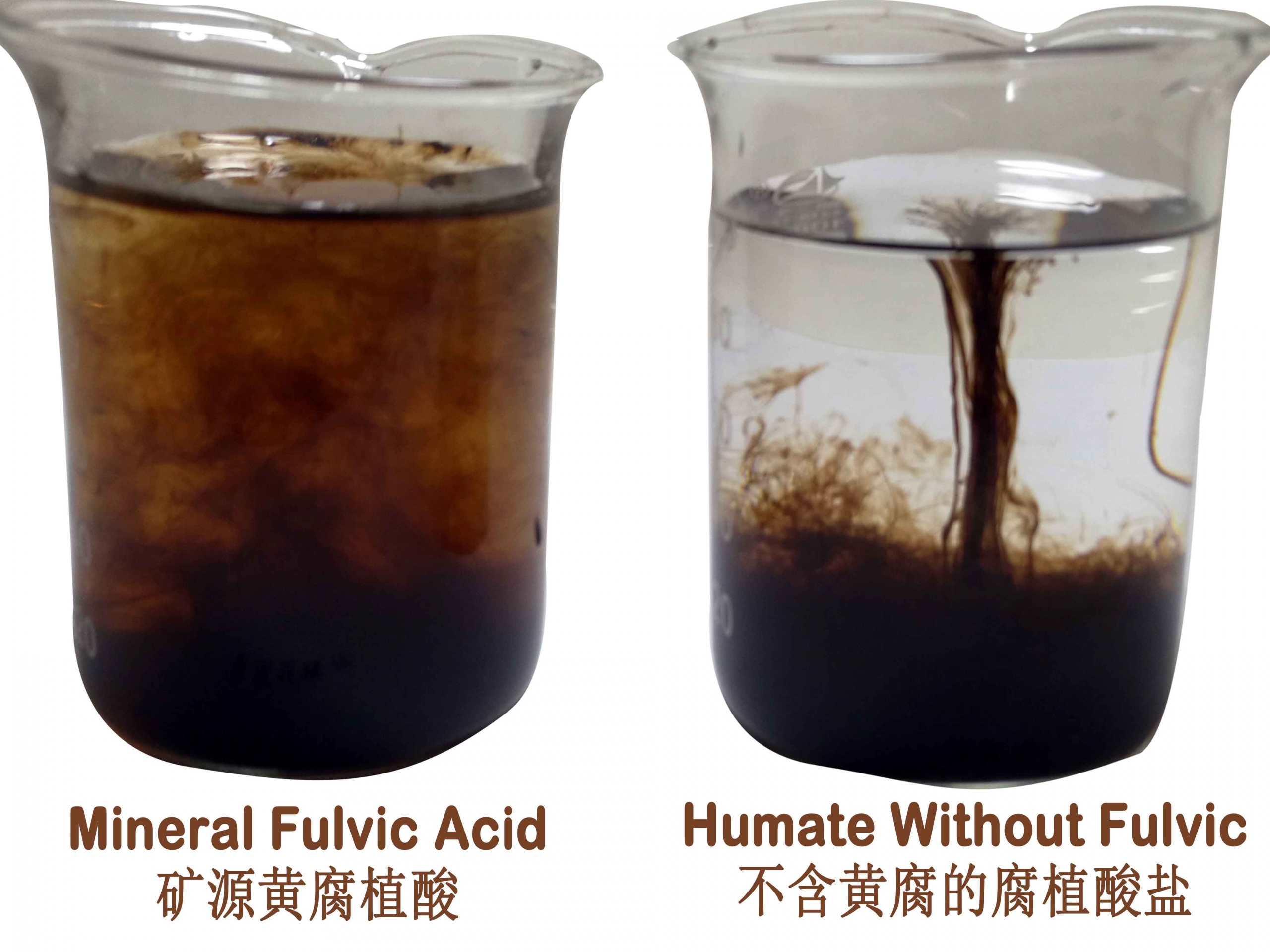
- Fully water soluble, solution appears brown black, free of impurities
- High humic acid content (usually >50%), appropriate proportion of fulvic acid
- Heavy metal content below national limit standards
- Clear ingredient description and quality inspection report
Scientific Usage Guidelines
1. Soil Base Application Technology
Applicable situations: Soil improvement, base fertilizer efficiency enhancement, continuous cropping obstacle management
Usage methods:
- Mixed with organic fertilizers: Add 2 3 kg of water soluble humic acid powder per ton of organic fertilizer
- Mixed with chemical fertilizers: Add 5 10% of chemical fertilizer amount
- Separate application: Use 1 2 kg per acre, dilute with water and apply with irrigation water
Precautions: Apply evenly, avoid local excessive concentration
2. Topdressing Application Scheme
Applicable situations: Nutritional enhancement during critical crop growth stages, stress alleviation
Usage methods:
- Drip irrigation fertilization: 200 500 grams per acre per application, diluted 1000 1500 times
- Irrigation application: 500 1000 grams per acre per application, applied with water
- Hole application: Dilute 500 times and apply by hole, 200 300 ml per hole
Optimal timing: Critical growth stages such as tillering stage, pre flowering, fruit expansion period
3. Foliar Spraying Technology
Applicable situations: Rapid nutrient supplementation, stress alleviation, quality improvement
Usage methods:
- Dilution concentration: 0.1% 0.3% (1000 3000 times dilution)
- Spraying time: Choose windless or breezy mornings or evenings
- Spraying requirements: Uniformly spray both sides of leaves until thoroughly wet but not dripping
Key stages: Seedling stage, pre flowering stage, color transformation period, etc.
4. Seed Treatment Applications
Applicable situations: Promoting germination, cultivating strong seedlings, preventing soil borne diseases
Usage methods:
- Seed soaking: Soak in 0.05% 0.1% solution for 6 12 hours
- Seed coating: Evenly coat 2 3 grams of powder per kg of seeds
Future Prospects: The Role of Water Soluble Humic Acid in Sustainable Agriculture
With increasing global requirements for food safety and environmental protection, water soluble humic acid, as a natural, efficient, and environmentally friendly plant nutrition agent, has broad application prospects. Future development directions include:
- Precision: Developing specialized formulas for different crops and soil conditions
- Functionalization: Compounding with biostimulants, beneficial microorganisms, etc., to develop multifunctional products
- Intelligence: Integrating with technologies such as IoT and big data to achieve precise application
- Standardization: Establishing complete quality standards and evaluation systems
Conclusion
Water soluble humic acid is a precious gift from nature to humanity, a bridge connecting traditional and modern agriculture. It is not just a product but also a philosophy embodying the wisdom of harmonious coexistence between humans and nature. On the path towards developing high yield, high quality, efficient, ecological, and safe modern agriculture, humic acid will undoubtedly play an increasingly important role.
We believe that through scientific research and rational application, water soluble humic acid will make significant contributions to global food security and agricultural sustainable development. If you have any questions about the application of humic acid or need more detailed technical guidance, please feel free to contact our expert team. We are committed to providing you with professional technical support and services.
Disclaimer: This content is based on existing scientific research and technical practices. Specific applications should be adjusted according to local soil conditions, crop types, and climate characteristics. Please read product instructions and follow recommended dosage before use.
WRITTEN BY JFHA-ZTT