[:en]


-
Product Overview
-
Technical Details
-
Recommended Applications
-
Packaging & Storage
-
Certifications & Compliance
-
MSDS / TSD
-
Successful Cases
-
FAQ
Humic Acid Liquid Product Overview
Humic acid liquid is a high-quality organic fertilizer derived from naturally occurring humic substances in leonardite, lignite, or other organic deposits. Rich in humic and fulvic acids, it plays a vital role in enhancing soil fertility, promoting plant growth, and improving crop yield.
By improving soil structure and increasing nutrient availability, humic acid liquid helps plants absorb essential elements more efficiently. Its chelating properties also aid in reducing soil toxicity by binding heavy metals and other harmful substances. This makes it an ideal solution for sustainable agriculture, organic farming, and soil restoration.
Key benefits include:
-
Enhances Soil Health: Stimulates microbial activity and improves soil structure for better aeration and water retention.
-
Promotes Plant Growth: Encourages root development, increases nutrient uptake, and boosts plant resilience.
-
Increases Crop Yield: Improves overall crop quality and productivity.
-
Eco-Friendly Solution: Derived from natural sources, safe for the environment and long-term soil fertility.
Humic acid liquid is suitable for a wide range of crops, including fruits, vegetables, grains, and horticultural plants, providing a natural, efficient, and sustainable approach to modern agriculture.
Humic Acid Liquid Technical Details
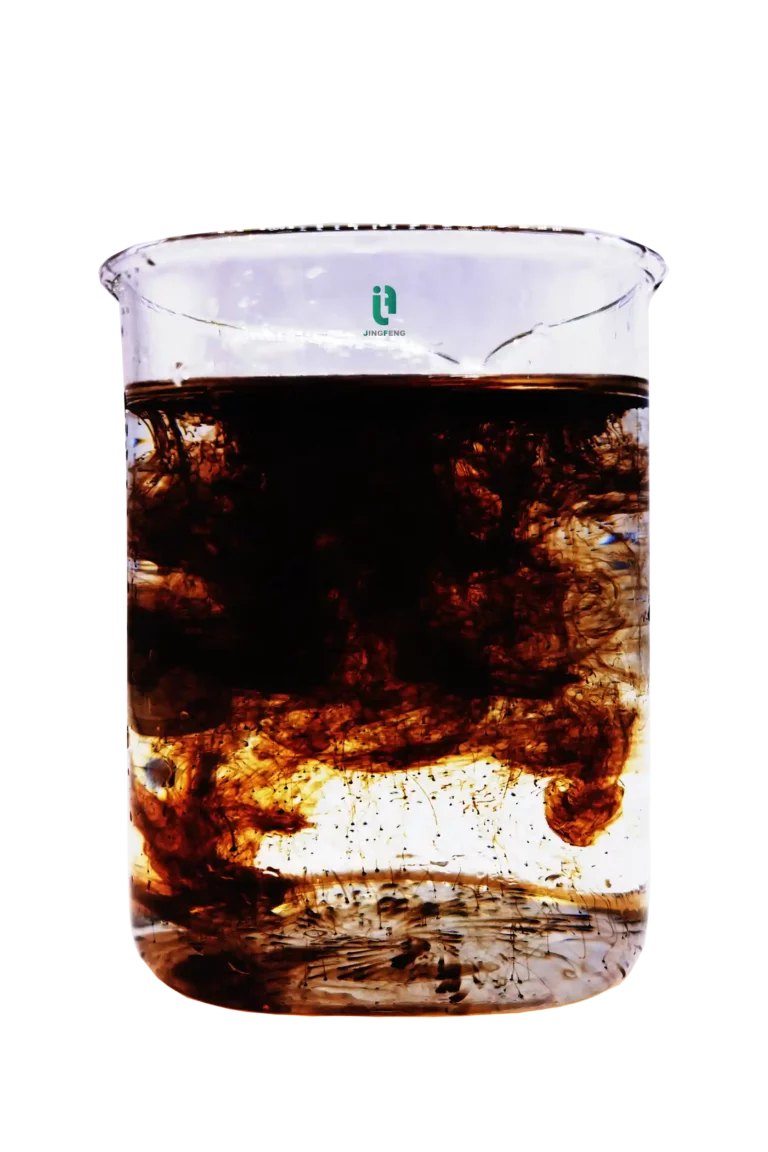
| Appearance | Black Liquid |
| Total Humic acids 1/2 | ≥13%(w/w) |
| K2O | ≥1%(w/w) |
| Fulvic Acid 1 | ≥3%(w/w) |
| pH | 9-11 |
| Density | 1.11 – 1.12 g/cm3 |
| Dry Matter | 20 – 22 % |
* 1 is the test methods,HGT5334-2018 / ISO 19822 / HPTA / AAPFCO / IHSS Analysis method
* 2 is another test method, CDFA / Colorimetric method
Recommended Applications for Humic Acid Liquid
Application Scope
Agricultural Crops
Field crops such as wheat, corn, rice, cotton, and oilseeds, soybeans, sugar beet, barley, and so on.
Vegetables
Open-field and greenhouse vegetables including tomatoes, cucumbers, peppers, lettuce, and broccoli.
Fruit Trees
Pome fruits (apple, pear), stone fruits (peach, cherry), citrus, grapes, and berries, Tropical & Subtropical Fruits.
* Other Scenarios: Hydroponics, substrate cultivation, lawn & landscape greening, seed treatment, nursery production, and flower farming.
Recommended Dosage & Application Methods
Dosages may vary slightly based on soil properties, crop varieties, and local climate conditions. Adjustments are recommended according to actual field conditions.
| Application Method | Dosage Specification | Timing & Notes |
|---|---|---|
| Soil Application | 5 – 20 L/ha | Apply during seedling stage, flowering stage, or fruit expansion stage. Can be split into 2 – 3 applications for better results. |
| Foliar Spray | 75 – 150 ml/100 L water | Spray every 2 weeks during the growing season. Avoid spraying under strong sunlight or high temperature (best at dawn or dusk). |
| Substrate Application | 0.5 – 1.5 L/m³ substrate | Mix thoroughly with the substrate before sowing or transplanting to ensure uniform distribution. |
| Seed Treatment | 0.5% concentration (500 mL/100 kg seeds) | Dilute with water,seed dressing (drench or coat seeds) and dry in shade before sowing. Adjust based on seed thousand-grain weight. |
| Hydroponic Application | 0.5% concentration (same as seed treatment) | Add to the hydroponic nutrient solution and stir well. Monitor pH value and adjust if necessary. |
Mixing Steps
-
Half-filled water - Add liquid humic acid
- Add other fertilizers/pesticides
- Fill water and stir
Packaging & Storage
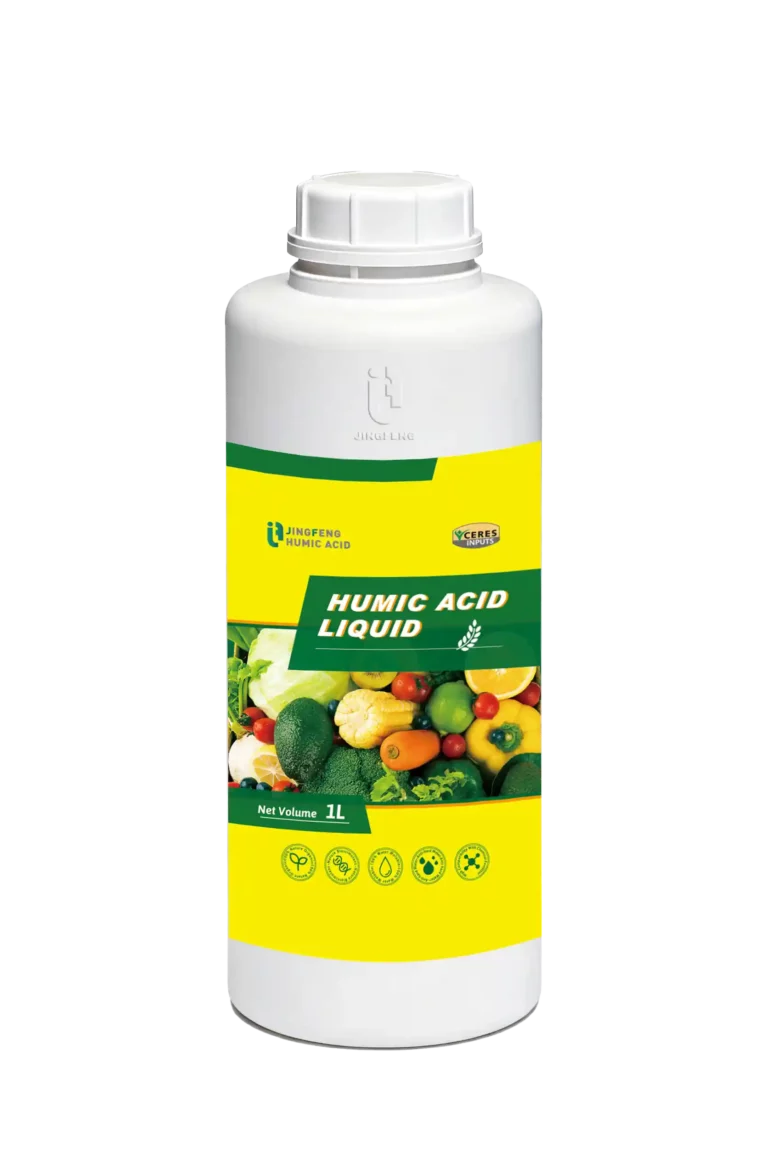
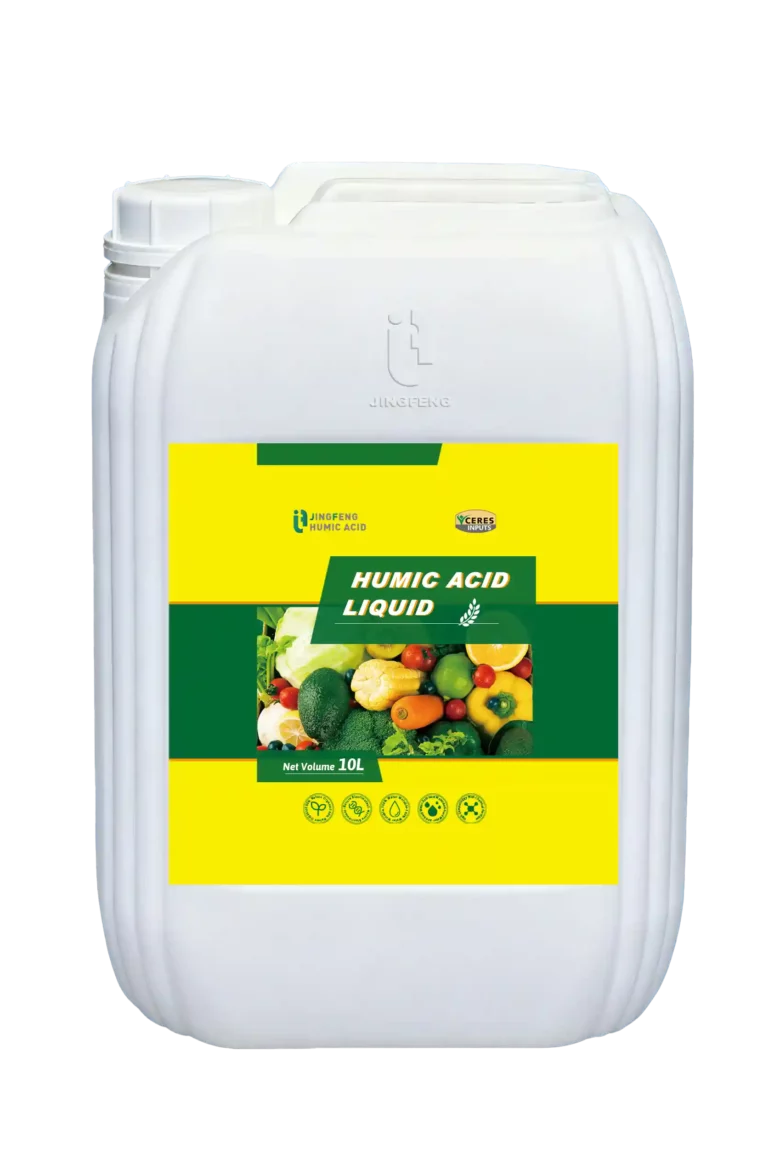
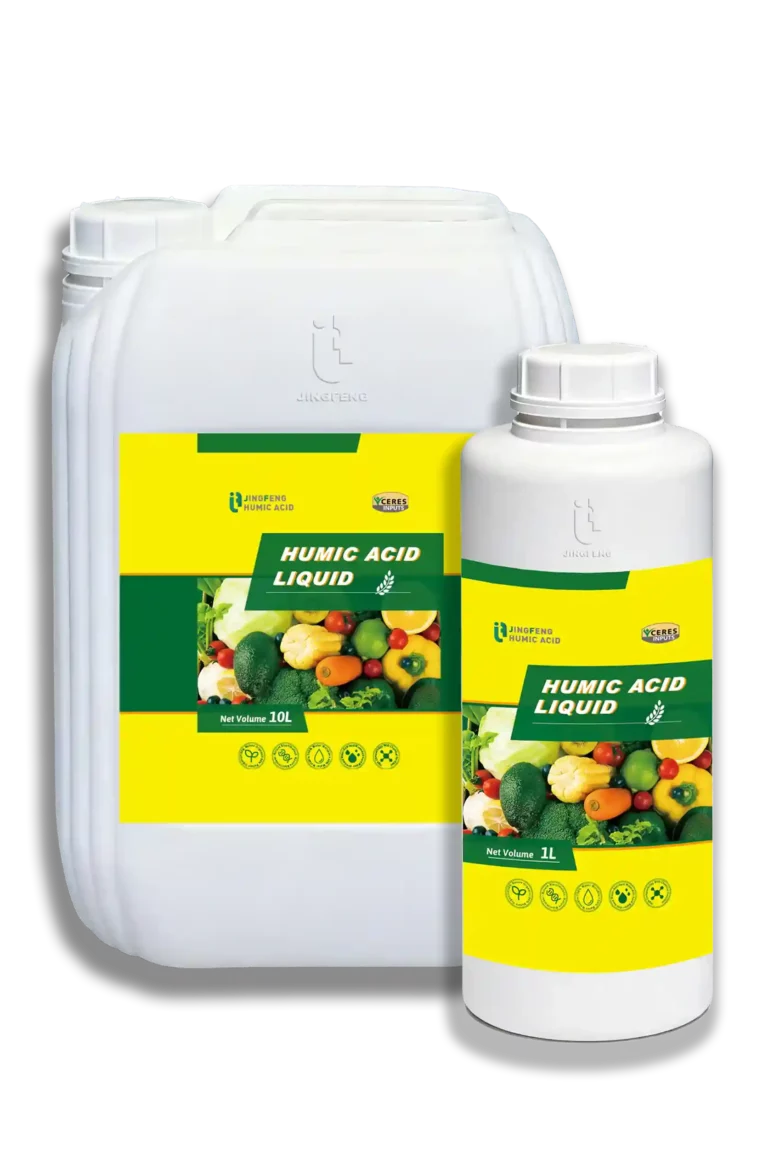
We offer a range of standard packaging solutions: 1L, 5L, 10L, 20L containers, IBC tanks.Custom packaging services are also available. Our team will provide tailored recommendations based on your specific requirements to ensure proper storage and transportation, maintaining product integrity throughout the process.
1L bottle
10L/20L bucket
1000 IBC tank
Certifications & Compliance
-
CERES (Confirmationfor Materials Used in Organic Agriculture) -
REACH (Green chemical innovation, permitted in the EU) -
ISO9001 / ISO14001 / ISO22000 -
Heavy Metal Test Report from ISO certified lab
Safety Data Sheet / Technical Data Sheet
-
MSDS (Liquid humic acid material safety data sheet) -
TDS (Liquid humic acid material safety data sheet)
Successful Cases
Agricultural field:
- Case study of cotton fields in Xinjiang: After applying liquid humic acid, the soil aggregate structure improved by 40%, porosity increased by 25%, and the water and fertilizer retention capacity was significantly enhanced.
- In the restoration of mining areas in Hebei Province, humic acid complexation technology reduced the soluble cadmium content in the soil by 72% and lowered the restoration cost by 40%.
Industry and Environmental Protection
- Remediation of chromium-contaminated soil: In the Jinan Yuxing project, the detoxification rate of humic acid remediation agent is ≥99.92%, and the remediated land can be directly used for crop cultivation.
- Improvement of saline-alkali land: The technology of China University of Petroleum enables “restoration and planting in the same year”, with the cost of treatment per mu being only one-third of that of traditional methods.
China University of Petroleum (East China): Turning agricultural and forestry waste into treasure, ecological cycle helps rural revitalization. 2024-01-04, Source: Planning Department Save
Liquid Humic Acid FAQ
1. What is liquid humic acid, and how is it produced?
Liquid humic acid is a concentrated, water-soluble formulation derived from natural organic sources like leonardite, peat, or weathered coal. It is produced through advanced extraction processes— alkaline extraction—followed by purification to remove impurities. This results in a stable, high-active product rich in humic acids, fulvic acids, and trace minerals, designed for easy absorption by plants and soil.
2. How does liquid humic acid differ from solid humic acid powders?
Compared to solid powders, liquid humic acid offers several key advantages: it has 100% water solubility (no clumping or sedimentation), faster absorption by plant roots and foliage, and easier mixing with fertilizers, pesticides, or irrigation systems. It also eliminates the need for dissolving or grinding, reducing application time and ensuring uniform distribution in soil or on crops.
3. Which crops benefit most from liquid humic acid application?
Liquid humic acid is versatile and suitable for all crops, including field crops (wheat, corn, cotton), cash crops (fruits, vegetables, grapes), ornamental plants, and even hydroponic systems. It is particularly effective for crops grown in poor soil conditions (saline-alkaline, compacted, or low-organic-matter soils) as it improves soil structure and nutrient uptake.
4. What are the recommended application methods and rates?
Common application methods include:Please refer to the “Recommended Dosage & Application Methods” section of this page.
5. Can liquid humic acid be mixed with other fertilizers or pesticides?
Yes, it is compatible with most water-soluble fertilizers (nitrogen, phosphorus, potassium), micronutrients, and non-alkaline pesticides. However, always perform a small compatibility test first: mix a small amount of liquid humic acid with the desired product, check for flocculation or precipitation, and proceed only if the mixture remains uniform.
6. How long does it take to see results after application?
Short-term effects (1-2 weeks) include improved seed germination, enhanced root growth, and darker green foliage. Long-term benefits (4-8 weeks) manifest as better soil aggregation, increased water retention, reduced nutrient leaching, and higher crop yield/quality. Results may vary based on soil conditions and application frequency.
7. Is liquid humic acid safe for the environment, crops, and humans?
Yes, when used as directed. It is an organic, non-toxic product derived from natural sources. It does not leave harmful residues on crops, is safe for beneficial soil organisms (earthworms, microbes), and complies with international organic standards (e.g., CERES, OMRI, ECOCERT). Avoid direct contact with eyes; rinse with water if contact occurs.
8. What is the shelf life of liquid humic acid, and how should it be stored?
Unopened, it has a shelf life of 24 months when stored in a cool, dry, and dark place (temperature 5-35°C). Avoid exposure to direct sunlight, extreme temperatures (below 0°C or above 40°C), and contamination. Once opened, seal tightly and use within 6 months for optimal efficacy.
9. How does liquid humic acid improve soil health?
It enhances soil health by:
- Binding soil particles to form stable aggregates, improving aeration and water infiltration.
- Chelating essential nutrients (iron, zinc, manganese) to make them more available to plants.
- Stimulating the growth of beneficial soil microbes, which decompose organic matter and cycle nutrients.
- Reducing soil salinity and heavy metal toxicity by forming complexes with harmful ions.
10. Can liquid humic acid be used in organic farming?
Absolutely. JINGFENG high-quality liquid humic acid products (already certified by CERES) meet the strict requirements of organic farming. They are free from synthetic additives and help maintain soil fertility without relying on chemical inputs, making them a key tool for sustainable organic agriculture.
Related Products
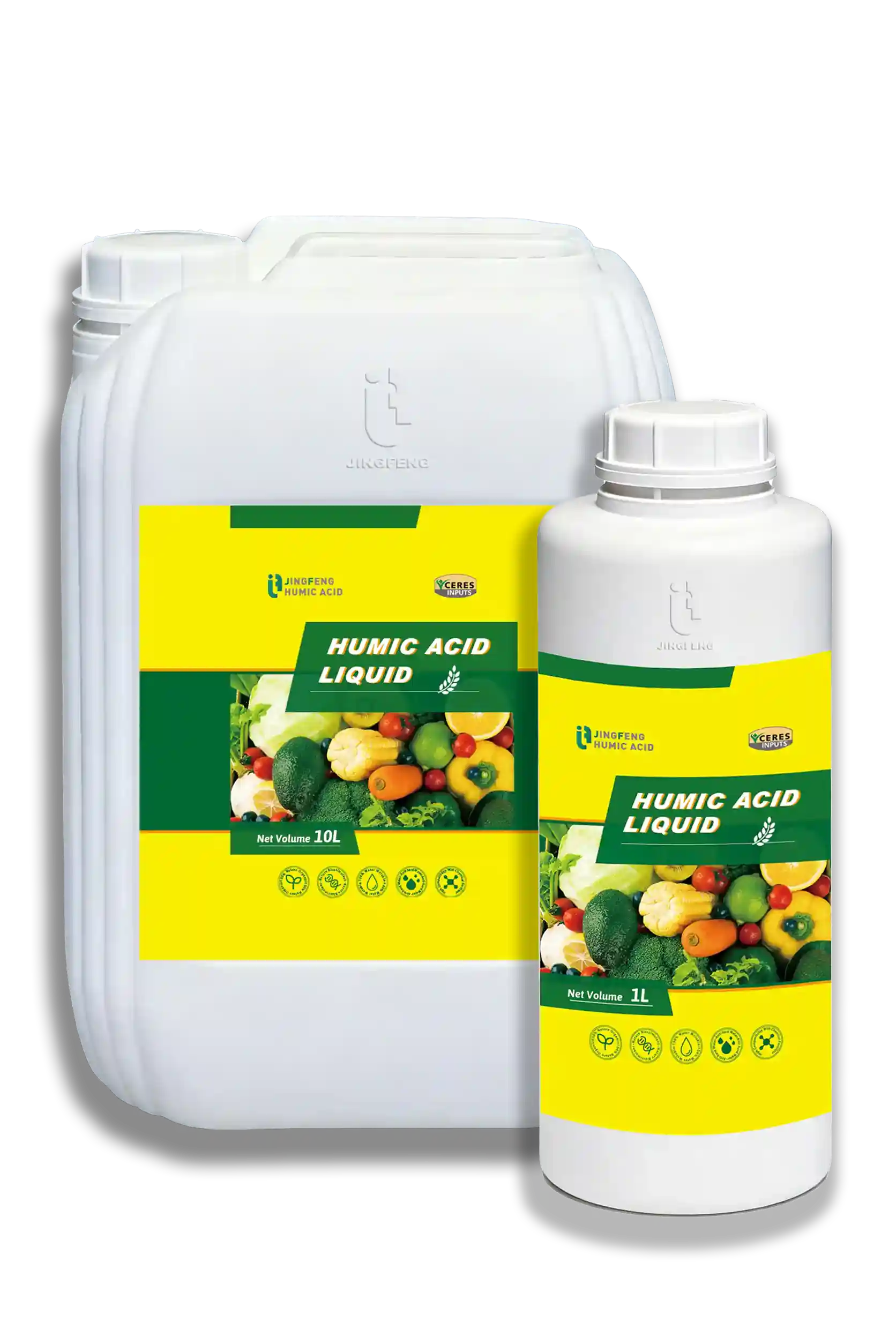
Humic Acid Liquid
Humic Fulvic Acid Original Liquid
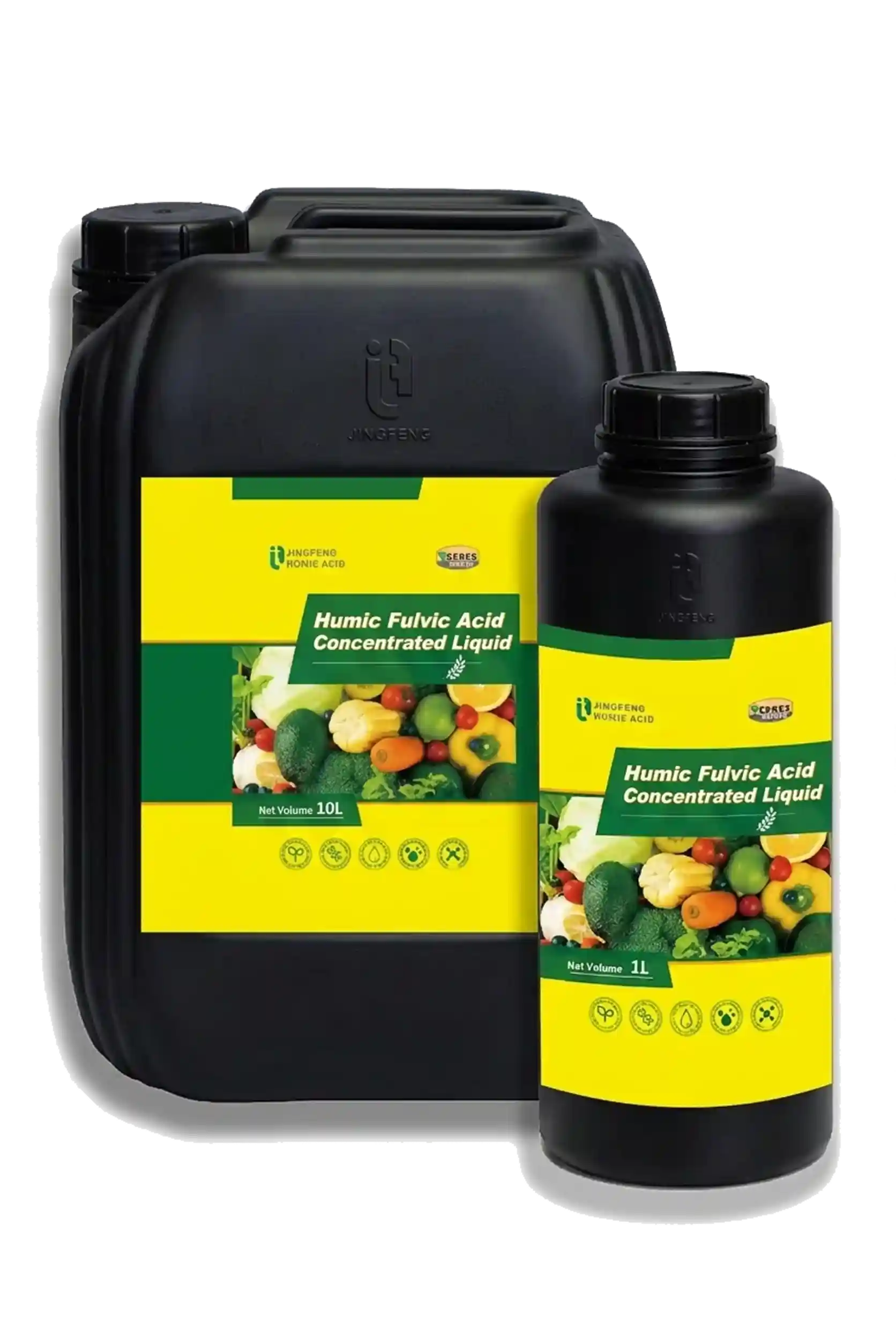
Humic Fulvic Acid Concentrated Liquid
Amino Acid Liquid Fertilizer
Sodium-Free Mineral Source Potassium Fulvate FlakesⅡ
View Details
[:ja]


-
Product Overview
-
Technical Details
-
Recommended Applications
-
Packaging & Storage
-
Certifications & Compliance
-
MSDS / TSD
-
Successful Cases
-
FAQ
Humic Acid Liquid Product Overview
Humic acid liquid is a high-quality organic fertilizer derived from naturally occurring humic substances in leonardite, lignite, or other organic deposits. Rich in humic and fulvic acids, it plays a vital role in enhancing soil fertility, promoting plant growth, and improving crop yield.
By improving soil structure and increasing nutrient availability, humic acid liquid helps plants absorb essential elements more efficiently. Its chelating properties also aid in reducing soil toxicity by binding heavy metals and other harmful substances. This makes it an ideal solution for sustainable agriculture, organic farming, and soil restoration.
Key benefits include:
-
Enhances Soil Health: Stimulates microbial activity and improves soil structure for better aeration and water retention.
-
Promotes Plant Growth: Encourages root development, increases nutrient uptake, and boosts plant resilience.
-
Increases Crop Yield: Improves overall crop quality and productivity.
-
Eco-Friendly Solution: Derived from natural sources, safe for the environment and long-term soil fertility.
Humic acid liquid is suitable for a wide range of crops, including fruits, vegetables, grains, and horticultural plants, providing a natural, efficient, and sustainable approach to modern agriculture.
Humic Acid Liquid Technical Details
| Appearance | Black Liquid |
| Total Humic acids 1 | ≥13% |
| Total Humic acids 1/2 | ≥13% |
| K2O | ≥1% |
| Fulvic Acid 1 | ≥3% |
| pH | 9-11 |
| Density | 1.11 – 1.12 g/cm3 |
| Dry Matter | 20 – 22 % |
* 1 is the test methods,HGT5334-2018 / ISO 19822 / HPTA / AAPFCO / IHSS Analysis method
* 2 is another test method, CDFA / Colorimetric method
Recommended Applications for Humic Acid Liquid
Application Scope
Agricultural Crops
Field crops such as wheat, corn, rice, cotton, and oilseeds, soybeans, sugar beet, barley, and so on.
Vegetables
Open-field and greenhouse vegetables including tomatoes, cucumbers, peppers, lettuce, and broccoli.
Fruit Trees
Pome fruits (apple, pear), stone fruits (peach, cherry), citrus, grapes, and berries, Tropical & Subtropical Fruits.
* Other Scenarios: Hydroponics, substrate cultivation, lawn & landscape greening, seed treatment, nursery production, and flower farming.
Recommended Dosage & Application Methods
Dosages may vary slightly based on soil properties, crop varieties, and local climate conditions. Adjustments are recommended according to actual field conditions.
| Application Method | Dosage Specification | Timing & Notes |
|---|---|---|
| Soil Application | 5 – 20 L/ha | Apply during seedling stage, flowering stage, or fruit expansion stage. Can be split into 2 – 3 applications for better results. |
| Foliar Spray | 75 – 150 ml/100 L water | Spray every 2 weeks during the growing season. Avoid spraying under strong sunlight or high temperature (best at dawn or dusk). |
| Substrate Application | 0.5 – 1.5 L/m³ substrate | Mix thoroughly with the substrate before sowing or transplanting to ensure uniform distribution. |
| Seed Treatment | 0.5% concentration (500 mL/100 kg seeds) | Dilute with water,seed dressing (drench or coat seeds) and dry in shade before sowing. Adjust based on seed thousand-grain weight. |
| Hydroponic Application | 0.5% concentration (same as seed treatment) | Add to the hydroponic nutrient solution and stir well. Monitor pH value and adjust if necessary. |
Mixing Steps
-
Half-filled water - Add liquid humic acid
- Add other fertilizers/pesticides
- Fill water and stir
Packaging & Storage
We offer a range of standard packaging solutions: 1L, 5L, 10L, 20L containers, IBC tanks.Custom packaging services are also available. Our team will provide tailored recommendations based on your specific requirements to ensure proper storage and transportation, maintaining product integrity throughout the process.
1L bottle
10L/20L bucket
1000 IBC tank
Certifications & Compliance
-
CERES (Confirmationfor Materials Used in Organic Agriculture) -
REACH (Green chemical innovation, permitted in the EU) -
ISO9001 / ISO14001 / ISO22000 -
Heavy Metal Test Report from ISO certified lab
Safety Data Sheet / Technical Data Sheet
-
MSDS (Liquid humic acid material safety data sheet) -
TDS (Liquid humic acid material safety data sheet)
Successful Cases
Agricultural field:
- Case study of cotton fields in Xinjiang: After applying liquid humic acid, the soil aggregate structure improved by 40%, porosity increased by 25%, and the water and fertilizer retention capacity was significantly enhanced.
- In the restoration of mining areas in Hebei Province, humic acid complexation technology reduced the soluble cadmium content in the soil by 72% and lowered the restoration cost by 40%.
Industry and Environmental Protection
- Remediation of chromium-contaminated soil: In the Jinan Yuxing project, the detoxification rate of humic acid remediation agent is ≥99.92%, and the remediated land can be directly used for crop cultivation.
- Improvement of saline-alkali land: The technology of China University of Petroleum enables “restoration and planting in the same year”, with the cost of treatment per mu being only one-third of that of traditional methods.
China University of Petroleum (East China): Turning agricultural and forestry waste into treasure, ecological cycle helps rural revitalization. 2024-01-04, Source: Planning Department Save
Liquid Humic Acid FAQ
1. What is liquid humic acid, and how is it produced?
Liquid humic acid is a concentrated, water-soluble formulation derived from natural organic sources like leonardite, peat, or weathered coal. It is produced through advanced extraction processes— alkaline extraction—followed by purification to remove impurities. This results in a stable, high-active product rich in humic acids, fulvic acids, and trace minerals, designed for easy absorption by plants and soil.
2. How does liquid humic acid differ from solid humic acid powders?
Compared to solid powders, liquid humic acid offers several key advantages: it has 100% water solubility (no clumping or sedimentation), faster absorption by plant roots and foliage, and easier mixing with fertilizers, pesticides, or irrigation systems. It also eliminates the need for dissolving or grinding, reducing application time and ensuring uniform distribution in soil or on crops.
3. Which crops benefit most from liquid humic acid application?
Liquid humic acid is versatile and suitable for all crops, including field crops (wheat, corn, cotton), cash crops (fruits, vegetables, grapes), ornamental plants, and even hydroponic systems. It is particularly effective for crops grown in poor soil conditions (saline-alkaline, compacted, or low-organic-matter soils) as it improves soil structure and nutrient uptake.
4. What are the recommended application methods and rates?
Common application methods include:Please refer to the “Recommended Dosage & Application Methods” section of this page.
5. Can liquid humic acid be mixed with other fertilizers or pesticides?
Yes, it is compatible with most water-soluble fertilizers (nitrogen, phosphorus, potassium), micronutrients, and non-alkaline pesticides. However, always perform a small compatibility test first: mix a small amount of liquid humic acid with the desired product, check for flocculation or precipitation, and proceed only if the mixture remains uniform.
6. How long does it take to see results after application?
Short-term effects (1-2 weeks) include improved seed germination, enhanced root growth, and darker green foliage. Long-term benefits (4-8 weeks) manifest as better soil aggregation, increased water retention, reduced nutrient leaching, and higher crop yield/quality. Results may vary based on soil conditions and application frequency.
7. Is liquid humic acid safe for the environment, crops, and humans?
Yes, when used as directed. It is an organic, non-toxic product derived from natural sources. It does not leave harmful residues on crops, is safe for beneficial soil organisms (earthworms, microbes), and complies with international organic standards (e.g., CERES, OMRI, ECOCERT). Avoid direct contact with eyes; rinse with water if contact occurs.
8. What is the shelf life of liquid humic acid, and how should it be stored?
Unopened, it has a shelf life of 24 months when stored in a cool, dry, and dark place (temperature 5-35°C). Avoid exposure to direct sunlight, extreme temperatures (below 0°C or above 40°C), and contamination. Once opened, seal tightly and use within 6 months for optimal efficacy.
9. How does liquid humic acid improve soil health?
It enhances soil health by:
- Binding soil particles to form stable aggregates, improving aeration and water infiltration.
- Chelating essential nutrients (iron, zinc, manganese) to make them more available to plants.
- Stimulating the growth of beneficial soil microbes, which decompose organic matter and cycle nutrients.
- Reducing soil salinity and heavy metal toxicity by forming complexes with harmful ions.
10. Can liquid humic acid be used in organic farming?
Absolutely. JINGFENG high-quality liquid humic acid products (already certified by CERES) meet the strict requirements of organic farming. They are free from synthetic additives and help maintain soil fertility without relying on chemical inputs, making them a key tool for sustainable organic agriculture.
Related Products
[:ko]


액상 휴믹산 제품 개요
액상 휴믹산은 레오나르다이트, 갈탄 또는 기타 유기 광물 퇴적물에 함유된 천연 휴믹 물질에서 추출한 고품질 유기질 비료입니다. 휴믹산과 풀빅산이 풍부하여 토양 비옥도 증진, 식물 생장 촉진, 작물 수확량 증대에 중요한 역할을 합니다.
액상 휴믹산은 토양 구조를 개선하고 영양소 이용률을 높여 식물이 필수 원소를 더욱 효율적으로 흡수하도록 돕습니다. 또한 킬레이트 작용을 통해 중금속 및 기타 유해 물질과 결합하여 토양 독성을 감소시킵니다. 따라서 지속 가능한 농업, 유기농업, 토양 복원에 이상적인 솔루션입니다.
주요 이점은 다음과 같습니다.
토양 건강 증진: 미생물 활동을 촉진하고 토양 구조를 개선하여 통기성과 수분 보유력을 향상시킵니다.
식물 생장 촉진: 뿌리 발달을 촉진하고 영양소 흡수를 증가시키며 식물의 저항력을 강화합니다.
작물 수확량 증대: 작물의 전반적인 품질과 생산성을 향상시킵니다.
친환경 솔루션: 천연 원료에서 추출하여 환경에 안전하고 토양 비옥도를 장기적으로 유지해줍니다.
액상 휴믹산은 과일, 채소, 곡물, 원예 작물 등 다양한 작물에 적합하며, 현대 농업에 자연적이고 효율적이며 지속 가능한 해결책을 제공합니다.
액상 휴믹산 기술 세부 정보
| Appearance | Black Liquid |
| Total Humic acids 1 | ≥13% |
| Total Humic acids 1/2 | ≥13% |
| K2O | ≥1% |
| Fulvic Acid 1 | ≥3% |
| pH | 9-11 |
| Density | 1.11 – 1.12 g/cm3 |
| Dry Matter | 20 – 22 % |
* 1은 시험 방법(HGT5334-2018/ISO 19822/HPTA/AAPFCO/IHSS 분석법)입니다.
* 2는 다른 시험 방법(CDFA/비색법)입니다.
액상 휴믹산의 권장 사용 용도
적용 범위
농작물
밀, 옥수수, 쌀, 면화, 유채, 콩, 사탕무, 보리 등과 같은 밭작물.
채소
노지 및 온실에서 재배되는 채소에는 토마토, 오이, 고추, 상추, 브로콜리 등이 포함됩니다.
과일나무
사과, 배와 같은 핵과류, 복숭아, 체리와 같은 핵과류, 감귤류, 포도, 베리류 등 열대 및 아열대 과일.
* 기타 시나리오: 수경재배, 기질 재배, 잔디 및 조경 녹화, 종자 처리, 묘목 생산, 화훼 재배.
권장 복용량 및 사용 방법
토양 특성, 작물 품종 및 지역 기후 조건에 따라 사용량이 약간씩 달라질 수 있습니다. 실제 현장 상황에 따라 사용량을 조정하는 것이 좋습니다.
| Application Method | Dosage Specification | Timing & Notes |
|---|---|---|
| Soil Application | 5 – 20 L/ha | Apply during seedling stage, flowering stage, or fruit expansion stage. Can be split into 2 – 3 applications for better results. |
| Foliar Spray | 75 – 150 ml/100 L water | Spray every 2 weeks during the growing season. Avoid spraying under strong sunlight or high temperature (best at dawn or dusk). |
| Substrate Application | 0.5 – 1.5 L/m³ substrate | Mix thoroughly with the substrate before sowing or transplanting to ensure uniform distribution. |
| Seed Treatment | 0.5% concentration (500 mL/100 kg seeds) | Dilute with water,seed dressing (drench or coat seeds) and dry in shade before sowing. Adjust based on seed thousand-grain weight. |
| Hydroponic Application | 0.5% concentration (same as seed treatment) | Add to the hydroponic nutrient solution and stir well. Monitor pH value and adjust if necessary. |
혼합 단계
-
반쯤 채워진 물 - 액상 휴믹산을 첨가하세요
- 다른 비료/살충제를 추가하세요
- 물을 채우고 저어주세요.
포장 및 보관
당사는 1L, 5L, 10L, 20L 용기 및 IBC 탱크를 포함한 다양한 표준 포장 솔루션을 제공합니다. 맞춤형 포장 서비스도 이용 가능합니다. 당사 전문가팀은 고객의 특정 요구 사항에 맞춰 적절한 보관 및 운송 방법을 제안하고, 제품의 품질을 전 과정에 걸쳐 유지할 수 있도록 지원합니다.
1리터 병
10리터/20리터 버킷
1000 IBC 탱크
인증 및 규정 준수
-
CERES(유기농업에 사용되는 재료에 대한 인증) -
REACH (EU에서 허용되는 친환경 화학 혁신) -
ISO9001 / ISO14001 / ISO22000 -
ISO 인증 연구소의 중금속 검사 보고서
안전 데이터 시트 / 기술 데이터 시트
-
MSDS(액상 휴믹산 물질안전데이터시트) -
TDS(액상 휴믹산 물질안전데이터시트)
성공 사례
농업 분야:
신장 목화밭 사례 연구: 액상 부식산을 적용한 결과, 토양 입단 구조가 40% 개선되고, 공극률이 25% 증가했으며, 수분 및 비료 보유 능력이 크게 향상되었습니다.
허베이성 광산 지역 복원 사업에서는 부식산 복합화 기술을 통해 토양 내 용해성 카드뮴 함량을 72% 감소시키고 복원 비용을 40% 절감했습니다.
산업 및 환경 보호
크롬 오염 토양 복원: 지난 위싱 프로젝트에서 부식산 복원제의 해독률은 99.92% 이상이며, 복원된 토지는 바로 작물 재배에 사용할 수 있습니다.
염알칼리성 토양 개량: 중국석유대학의 기술은 “복원 및 동시 식재”를 가능하게 하며, 1무(약 4,000㎡)당 처리 비용은 기존 방식의 3분의 1에 불과합니다.
중국석유대학교(동중국): 농림폐기물을 귀중한 자원으로 전환하고 생태순환을 통해 농촌 활성화를 도모하다. 2024년 1월 4일, 출처: 기획부서
액상 휴믹산 FAQ
1. 액상 휴믹산이란 무엇이며, 어떻게 생산됩니까?
Liquid humic acid is a concentrated, water-soluble formulation derived from natural organic sources like leonardite, peat, or weathered coal. It is produced through advanced extraction processes— alkaline extraction—followed by purification to remove impurities. This results in a stable, high-active product rich in humic acids, fulvic acids, and trace minerals, designed for easy absorption by plants and soil.
2. 액상 휴믹산은 고체 휴믹산 분말과 어떻게 다른가요?
Compared to solid powders, liquid humic acid offers several key advantages: it has 100% water solubility (no clumping or sedimentation), faster absorption by plant roots and foliage, and easier mixing with fertilizers, pesticides, or irrigation systems. It also eliminates the need for dissolving or grinding, reducing application time and ensuring uniform distribution in soil or on crops.
3. 액상 휴믹산 시비가 가장 효과적인 작물은 무엇입니까?
Liquid humic acid is versatile and suitable for all crops, including field crops (wheat, corn, cotton), cash crops (fruits, vegetables, grapes), ornamental plants, and even hydroponic systems. It is particularly effective for crops grown in poor soil conditions (saline-alkaline, compacted, or low-organic-matter soils) as it improves soil structure and nutrient uptake.
4. 권장되는 신청 방법과 요금은 무엇입니까?
Common application methods include:Please refer to the “Recommended Dosage & Application Methods” section of this page.
5. 액상 휴믹산을 다른 비료나 살충제와 혼합할 수 있습니까?
네, 대부분의 수용성 비료(질소, 인, 칼륨), 미량 영양소 및 비알칼리성 살충제와 호환됩니다. 하지만 항상 소량의 호환성 테스트를 먼저 실시하십시오. 액상 휴믹산을 원하는 제품에 소량 섞어 응집이나 침전이 발생하는지 확인하고, 혼합물이 균일한 상태를 유지하는 경우에만 진행하십시오.
6. 사용 후 효과가 나타나기까지 얼마나 걸립니까?
단기적인 효과(1~2주)로는 종자 발아율 향상, 뿌리 생장 촉진, 잎의 짙은 녹색 등이 있습니다. 장기적인 효과(4~8주)는 토양 입자 응집력 개선, 수분 보유력 증가, 양분 유실 감소, 작물 수확량 및 품질 향상으로 나타납니다. 결과는 토양 조건 및 시비 빈도에 따라 달라질 수 있습니다.
7. 액상 휴믹산은 환경, 작물 및 인체에 안전한가요?
Yes, when used as directed. It is an organic, non-toxic product derived from natural sources. It does not leave harmful residues on crops, is safe for beneficial soil organisms (earthworms, microbes), and complies with international organic standards (e.g., CERES, OMRI, ECOCERT). Avoid direct contact with eyes; rinse with water if contact occurs.
8. 액상 휴믹산의 유통기한은 얼마이며, 어떻게 보관해야 합니까?
개봉하지 않은 상태에서는 서늘하고 건조하며 어두운 곳(온도 5~35°C)에 보관 시 24개월 동안 보관 가능합니다. 직사광선, 극한 온도(0°C 미만 또는 40°C 이상), 오염을 피하십시오. 개봉 후에는 밀봉하여 6개월 이내에 사용하시면 최적의 효과를 보실 수 있습니다.
9. 액상 휴믹산은 어떻게 토양 건강을 개선합니까?
토양 건강을 증진시키는 방법은 다음과 같습니다.
토양 입자를 결합하여 안정적인 응집체를 형성함으로써 통기성과 수분 침투성을 향상시킵니다.
필수 영양소(철, 아연, 망간)를 킬레이트화하여 식물이 더 쉽게 흡수할 수 있도록 합니다.
유기물을 분해하고 영양소를 순환시키는 유익한 토양 미생물의 성장을 촉진합니다.
유해 이온과 복합체를 형성하여 토양의 염분과 중금속 독성을 감소시킵니다.
10. 액상 휴믹산을 유기농업에 사용할 수 있을까요?
물론입니다. 징펑(JINGFENG)의 고품질 액상 휴믹산 제품(CERES 인증 획득)은 유기농업의 엄격한 기준을 충족합니다. 합성 첨가물이 전혀 들어가지 않아 화학 비료에 의존하지 않고 토양 비옥도를 유지하는 데 도움을 주므로 지속 가능한 유기농업을 위한 핵심적인 도구입니다.
관련 상품
[:es]


-
Descripción general del producto
-
Detalles técnicos
-
Aplicaciones recomendadas
-
Embalaje y almacenamiento
-
Certificaciones y cumplimiento
-
MSDS / TSD
-
Casos de éxito
-
Preguntas frecuentes
Descripción general del producto de ácido húmico líquido
El ácido húmico líquido es un fertilizante orgánico de alta calidad derivado de sustancias húmicas presentes de forma natural en leonardita, lignito u otros depósitos orgánicos. Rico en ácidos húmicos y fúlvicos, desempeña un papel fundamental en la mejora de la fertilidad del suelo, el crecimiento vegetal y el rendimiento de los cultivos.
Al mejorar la estructura del suelo y aumentar la disponibilidad de nutrientes, el ácido húmico líquido ayuda a las plantas a absorber los elementos esenciales de forma más eficiente. Sus propiedades quelantes también ayudan a reducir la toxicidad del suelo al fijar metales pesados y otras sustancias nocivas. Esto lo convierte en una solución ideal para la agricultura sostenible, la agricultura orgánica y la restauración de suelos.
Beneficios clave:
Mejora la salud del suelo: Estimula la actividad microbiana y mejora la estructura del suelo para una mejor aireación y retención de agua.
Promueve el crecimiento de las plantas: Fomenta el desarrollo radicular, aumenta la absorción de nutrientes y aumenta la resiliencia de las plantas.
Aumenta el rendimiento de los cultivos: Mejora la calidad y la productividad general de los cultivos.
Solución ecológica: Derivado de fuentes naturales, seguro para el medio ambiente y la fertilidad del suelo a largo plazo.
El ácido húmico líquido es adecuado para una amplia gama de cultivos, incluidas frutas, verduras, cereales y plantas hortícolas, proporcionando un enfoque natural, eficiente y sostenible a la agricultura moderna.
Detalles técnicos del ácido húmico líquido
| Appearance | Black Liquid |
| Total Humic acids 1 | ≥13% |
| Total Humic acids 1/2 | ≥13% |
| K2O | ≥1% |
| Fulvic Acid 1 | ≥3% |
| pH | 9-11 |
| Density | 1.11 – 1.12 g/cm3 |
| Dry Matter | 20 – 22 % |
* 1 corresponde a los métodos de prueba: HGT5334-2018 / ISO 19822 / HPTA / AAPFCO / Método de análisis IHSS
* 2 corresponde a otro método de prueba: CDFA / Método colorimétrico
Aplicaciones recomendadas para el ácido húmico líquido
Ámbito de aplicación
Cultivos agrícolas
Cultivos de campo como trigo, maíz, arroz, algodón, semillas oleaginosas, soja, remolacha azucarera, cebada, etc.
Verduras
Hortalizas de campo abierto y de invernadero, incluidos tomates, pepinos, pimientos, lechuga y brócoli.
Árboles frutales
Frutas de pepita (manzana, pera), frutas de hueso (melocotón, cereza), cítricos, uvas y bayas, frutas tropicales y subtropicales.
* Otros escenarios: hidroponía, cultivo de sustrato, reverdecimiento de césped y paisajes, tratamiento de semillas, producción de viveros y cultivo de flores.
Dosis recomendada y métodos de aplicación
Las dosis pueden variar ligeramente según las propiedades del suelo, la variedad de cultivo y las condiciones climáticas locales. Se recomienda ajustar la dosis según las condiciones reales del campo.
| Application Method | Dosage Specification | Timing & Notes |
|---|---|---|
| Soil Application | 5 – 20 L/ha | Apply during seedling stage, flowering stage, or fruit expansion stage. Can be split into 2 – 3 applications for better results. |
| Foliar Spray | 75 – 150 ml/100 L water | Spray every 2 weeks during the growing season. Avoid spraying under strong sunlight or high temperature (best at dawn or dusk). |
| Substrate Application | 0.5 – 1.5 L/m³ substrate | Mix thoroughly with the substrate before sowing or transplanting to ensure uniform distribution. |
| Seed Treatment | 0.5% concentration (500 mL/100 kg seeds) | Dilute with water,seed dressing (drench or coat seeds) and dry in shade before sowing. Adjust based on seed thousand-grain weight. |
| Hydroponic Application | 0.5% concentration (same as seed treatment) | Add to the hydroponic nutrient solution and stir well. Monitor pH value and adjust if necessary. |
Pasos de mezcla
-
Agua medio llena - Añadir ácido húmico líquido
- Añadir otros fertilizantes/pesticidas
- Llene agua y revuelva
Embalaje y almacenamiento
Ofrecemos una gama de soluciones de embalaje estándar: contenedores de 1 L, 5 L, 10 L, 20 L y tanques IBC. También ofrecemos servicios de embalaje a medida. Nuestro equipo le brindará recomendaciones personalizadas según sus necesidades específicas para garantizar un almacenamiento y transporte adecuados, manteniendo la integridad del producto durante todo el proceso.
Botella de 1 litro
Cubo de 10L/20L
Tanque IBC de 1000
Certifications & Compliance
-
CERES (Confirmación de Materiales Utilizados en Agricultura Orgánica) -
REACH (Innovación química verde, permitida en la UE) -
ISO9001 / ISO14001 / ISO22000 -
Informe de prueba de metales pesados de un laboratorio con certificación ISO
Obtenga los últimos documentos aquí
Ficha de datos de seguridad / Ficha técnica
-
MSDS (Hoja de datos de seguridad del material de ácido húmico líquido) -
TDS (Hoja de datos de seguridad del material de ácido húmico líquido)
Obtenga los últimos documentos aquí
Casos de éxito
Campo agrícola:
Estudio de caso de campos de algodón en Xinjiang: Tras la aplicación de ácido húmico líquido, la estructura del suelo mejoró en un 40%, la porosidad aumentó en un 25% y la capacidad de retención de agua y fertilizantes aumentó significativamente.
En la restauración de zonas mineras en la provincia de Hebei, la tecnología de complejación de ácido húmico redujo el contenido de cadmio soluble en el suelo en un 72% y disminuyó el costo de restauración en un 40%.
Industria y protección ambiental
Remediación de suelos contaminados con cromo: En el proyecto Jinan Yuxing, la tasa de desintoxicación del agente de remediación de ácido húmico es ≥99,92%, y el terreno remediado puede utilizarse directamente para el cultivo.
Mejora de suelos salino-alcalinos: La tecnología de la Universidad del Petróleo de China permite la restauración y la siembra en el mismo año, con un costo de tratamiento por mu de tan solo un tercio del de los métodos tradicionales.
Universidad del Petróleo de China (Este de China): Transformar los desechos agrícolas y forestales en un tesoro: el ciclo ecológico contribuye a la revitalización rural. 2024-01-04, Fuente: Departamento de Planificación Guardar
Preguntas frecuentes sobre el ácido húmico líquido
1. ¿Qué es el ácido húmico líquido y cómo se produce?
El ácido húmico líquido es una formulación concentrada e hidrosoluble derivada de fuentes orgánicas naturales como la leonardita, la turba o el carbón meteorizado. Se produce mediante procesos avanzados de extracción (extracción alcalina), seguidos de una purificación para eliminar impurezas. Esto da como resultado un producto estable y altamente activo, rico en ácidos húmicos, ácidos fúlvicos y oligoelementos, diseñado para una fácil absorción por las plantas y el suelo.
2. ¿En qué se diferencia el ácido húmico líquido de los polvos de ácido húmico sólido?
En comparación con los polvos sólidos, el ácido húmico líquido ofrece varias ventajas clave: es 100 % soluble en agua (no se aglomera ni sedimenta), se absorbe más rápidamente por las raíces y el follaje, y se mezcla más fácilmente con fertilizantes, pesticidas o sistemas de riego. Además, elimina la necesidad de disolver o moler, lo que reduce el tiempo de aplicación y garantiza una distribución uniforme en el suelo o los cultivos.
3. ¿Qué cultivos se benefician más de la aplicación de ácido húmico líquido?
El ácido húmico líquido es versátil y apto para todo tipo de cultivos, incluyendo cultivos extensivos (trigo, maíz, algodón), cultivos comerciales (frutas, hortalizas, uvas), plantas ornamentales e incluso sistemas hidropónicos. Es especialmente eficaz para cultivos en suelos pobres (suelos salino-alcalinos, compactados o con bajo contenido de materia orgánica), ya que mejora la estructura del suelo y la absorción de nutrientes.
4. ¿Cuáles son los métodos y tasas de aplicación recomendados?
Los métodos de aplicación más comunes incluyen:
Consulte la sección “Dosis recomendada y métodos de aplicación” de esta página.
5. ¿Se puede mezclar el ácido húmico líquido con otros fertilizantes o pesticidas?
Sí, es compatible con la mayoría de los fertilizantes hidrosolubles (nitrógeno, fósforo, potasio), micronutrientes y pesticidas no alcalinos. Sin embargo, siempre realice primero una pequeña prueba de compatibilidad: mezcle una pequeña cantidad de ácido húmico líquido con el producto deseado, compruebe si hay floculación o precipitación y proceda solo si la mezcla permanece uniforme.
6. ¿Cuánto tiempo se tarda en ver resultados después de la aplicación?
Los efectos a corto plazo (1-2 semanas) incluyen una mejor germinación de las semillas, un mayor crecimiento de las raíces y un follaje de color verde más oscuro. Los beneficios a largo plazo (4-8 semanas) se manifiestan en una mejor agregación del suelo, mayor retención de agua, menor lixiviación de nutrientes y mayor rendimiento y calidad del cultivo. Los resultados pueden variar según las condiciones del suelo y la frecuencia de aplicación.
7. ¿El ácido húmico líquido es seguro para el medio ambiente, los cultivos y los seres humanos?
Sí, siempre que se use según las instrucciones. Es un producto orgánico, no tóxico y derivado de fuentes naturales. No deja residuos dañinos en los cultivos, es seguro para los organismos benéficos del suelo (lombrices de tierra, microbios) y cumple con las normas orgánicas internacionales (p. ej., CERES, OMRI, ECOCERT). Evite el contacto directo con los ojos; enjuáguelos con agua en caso de contacto.
8. ¿Cuál es la vida útil del ácido húmico líquido y cómo debe almacenarse?
Sin abrir, tiene una vida útil de 24 meses si se almacena en un lugar fresco, seco y oscuro (temperatura entre 5 y 35 °C). Evite la exposición a la luz solar directa, temperaturas extremas (inferiores a 0 °C o superiores a 40 °C) y la contaminación. Una vez abierto, ciérrelo herméticamente y consúmalo en un plazo de 6 meses para una eficacia óptima.
9. ¿Cómo mejora el ácido húmico líquido la salud del suelo?
Mejora la salud del suelo al:
Unir las partículas del suelo para formar agregados estables, mejorando la aireación y la infiltración de agua.
Quelar nutrientes esenciales (hierro, zinc, manganeso) para que estén más disponibles para las plantas.
Estimular el crecimiento de microbios beneficiosos del suelo, que descomponen la materia orgánica y reciclan los nutrientes.
Reducir la salinidad del suelo y la toxicidad de metales pesados mediante la formación de complejos con iones dañinos.
10. ¿Se puede utilizar ácido húmico líquido en la agricultura ecológica?
Por supuesto. Los productos de ácido húmico líquido de alta calidad de JINGFENG (ya certificados por CERES) cumplen con los estrictos requisitos de la agricultura orgánica. No contienen aditivos sintéticos y ayudan a mantener la fertilidad del suelo sin recurrir a productos químicos, lo que los convierte en una herramienta clave para la agricultura orgánica sostenible.
Productos relacionados
[:vi]


-
Tổng quan về sản phẩm
-
Thông tin chi tiết kỹ thuật
-
Các ứng dụng được đề xuất
-
Đóng gói và bảo quản
-
Chứng nhận và tuân thủ
-
MSDS / TSD
-
Các trường hợp thành công
-
Câu hỏi thường gặp
Tổng quan về sản phẩm dung dịch axit humic
Dung dịch axit humic là một loại phân bón hữu cơ chất lượng cao, được chiết xuất từ các chất humic tự nhiên có trong leonardite, than nâu hoặc các trầm tích hữu cơ khác. Giàu axit humic và axit fulvic, nó đóng vai trò quan trọng trong việc tăng cường độ phì nhiêu của đất, thúc đẩy sự phát triển của cây trồng và cải thiện năng suất cây trồng.
Bằng cách cải thiện cấu trúc đất và tăng khả năng hấp thụ chất dinh dưỡng, dung dịch axit humic giúp cây trồng hấp thụ các nguyên tố thiết yếu hiệu quả hơn. Đặc tính tạo phức chelate của nó cũng giúp giảm độc tính của đất bằng cách liên kết các kim loại nặng và các chất độc hại khác. Điều này làm cho nó trở thành một giải pháp lý tưởng cho nông nghiệp bền vững, nông nghiệp hữu cơ và phục hồi đất.
Những lợi ích chính bao gồm:
Tăng cường sức khỏe đất: Kích thích hoạt động của vi sinh vật và cải thiện cấu trúc đất để tăng khả năng thông khí và giữ nước.
Thúc đẩy sự phát triển của cây trồng: Khuyến khích sự phát triển của rễ, tăng khả năng hấp thụ chất dinh dưỡng và tăng sức đề kháng của cây trồng.
Tăng năng suất cây trồng: Cải thiện chất lượng và năng suất cây trồng tổng thể.
Giải pháp thân thiện với môi trường: Được chiết xuất từ các nguồn tự nhiên, an toàn cho môi trường và độ phì nhiêu của đất lâu dài.
Dung dịch axit humic phù hợp với nhiều loại cây trồng, bao gồm trái cây, rau quả, ngũ cốc và cây cảnh, cung cấp một phương pháp tự nhiên, hiệu quả và bền vững cho nông nghiệp hiện đại.
Thông tin chi tiết kỹ thuật về dung dịch axit humic
| Appearance | Black Liquid |
| Total Humic acids 1 | ≥13% |
| Total Humic acids 1/2 | ≥13% |
| K2O | ≥1% |
| Fulvic Acid 1 | ≥3% |
| pH | 9-11 |
| Density | 1.11 – 1.12 g/cm3 |
| Dry Matter | 20 – 22 % |
* 1 là phương pháp thử nghiệm HGT5334-2018 / ISO 19822 / HPTA / AAPFCO / phương pháp phân tích IHSS
* 2 là phương pháp thử nghiệm khác, CDFA / phương pháp đo màu
Các ứng dụng được đề xuất cho dung dịch axit humic lỏng
Phạm vi ứng dụng
Cây trồng nông nghiệp
Các loại cây trồng nông nghiệp như lúa mì, ngô, lúa gạo, bông, cây lấy dầu, đậu tương, củ cải đường, lúa mạch, v.v.
Rau
Các loại rau trồng ngoài trời và trong nhà kính bao gồm cà chua, dưa chuột, ớt, rau diếp và bông cải xanh.
Cây ăn quả
Các loại trái cây có hạt (táo, lê), trái cây có hột (đào, anh đào), trái cây họ cam quýt, nho và các loại quả mọng, trái cây nhiệt đới và cận nhiệt đới.
* Các trường hợp ứng dụng khác: Trồng cây thủy canh, trồng cây trên giá thể, làm xanh thảm cỏ và cảnh quan, xử lý hạt giống, sản xuất cây giống và trồng hoa.
Liều lượng và phương pháp sử dụng được khuyến nghị
Liều lượng có thể thay đổi đôi chút tùy thuộc vào đặc tính đất, giống cây trồng và điều kiện khí hậu địa phương. Nên điều chỉnh liều lượng theo điều kiện thực tế trên đồng ruộng.
| Application Method | Dosage Specification | Timing & Notes |
|---|---|---|
| Soil Application | 5 – 20 L/ha | Apply during seedling stage, flowering stage, or fruit expansion stage. Can be split into 2 – 3 applications for better results. |
| Foliar Spray | 75 – 150 ml/100 L water | Spray every 2 weeks during the growing season. Avoid spraying under strong sunlight or high temperature (best at dawn or dusk). |
| Substrate Application | 0.5 – 1.5 L/m³ substrate | Mix thoroughly with the substrate before sowing or transplanting to ensure uniform distribution. |
| Seed Treatment | 0.5% concentration (500 mL/100 kg seeds) | Dilute with water,seed dressing (drench or coat seeds) and dry in shade before sowing. Adjust based on seed thousand-grain weight. |
| Hydroponic Application | 0.5% concentration (same as seed treatment) | Add to the hydroponic nutrient solution and stir well. Monitor pH value and adjust if necessary. |
Các bước trộn
-
Nước đầy một nửa - Thêm axit humic dạng lỏng
- Thêm các loại phân bón/thuốc trừ sâu khác
- Đổ nước vào và khuấy đều.
Đóng gói & Lưu trữ
Chúng tôi cung cấp nhiều giải pháp đóng gói tiêu chuẩn: thùng chứa 1L, 5L, 10L, 20L, bồn IBC. Dịch vụ đóng gói theo yêu cầu cũng có sẵn. Đội ngũ của chúng tôi sẽ đưa ra các khuyến nghị phù hợp dựa trên yêu cầu cụ thể của bạn để đảm bảo việc bảo quản và vận chuyển đúng cách, duy trì chất lượng sản phẩm trong suốt quá trình.
Chai 1 lít
Thùng 10L/20L
Thùng chứa 1000 IBC
Chứng nhận & Tuân thủ
-
CERES (Chứng nhận về vật liệu sử dụng trong nông nghiệp hữu cơ) -
REACH (Đổi mới hóa chất xanh, được phép tại EU) -
ISO9001 / ISO14001 / ISO22000 -
Báo cáo kiểm nghiệm kim loại nặng từ phòng thí nghiệm đạt chứng nhận ISO.
Bảng dữ liệu an toàn / Bảng dữ liệu kỹ thuật
-
MSDS (Bảng dữ liệu an toàn vật liệu axit humic dạng lỏng) -
TDS (Bảng dữ liệu an toàn vật liệu axit humic dạng lỏng)
Các trường hợp thành công
Lĩnh vực nông nghiệp:
Nghiên cứu trường hợp ruộng bông ở Tân Cương: Sau khi sử dụng axit humic dạng lỏng, cấu trúc hạt đất được cải thiện 40%, độ xốp tăng 25%, và khả năng giữ nước và phân bón được tăng cường đáng kể.
Trong việc phục hồi các khu vực khai thác mỏ ở tỉnh Hà Bắc, công nghệ phức hợp axit humic đã giảm hàm lượng cadmium hòa tan trong đất xuống 72% và giảm chi phí phục hồi xuống 40%.
Công nghiệp và Bảo vệ Môi trường
Xử lý đất nhiễm crom: Trong dự án Jinan Yuxing, tỷ lệ khử độc của chất xử lý axit humic đạt ≥99,92%, và đất đã được xử lý có thể được sử dụng trực tiếp để trồng trọt.
Cải thiện đất nhiễm mặn kiềm: Công nghệ của Đại học Dầu khí Trung Quốc cho phép “phục hồi và trồng trọt trong cùng một năm”, với chi phí xử lý trên mỗi mẫu chỉ bằng một phần ba so với các phương pháp truyền thống.
Đại học Dầu khí Trung Quốc (Đông Trung Quốc): Biến chất thải nông lâm nghiệp thành tài nguyên quý giá, chu trình sinh thái giúp hồi sinh nông thôn. 04/01/2024, Nguồn: Sở Quy hoạch Lưu
Câu hỏi thường gặp về Axit Humic dạng lỏng
1. Axit humic dạng lỏng là gì và nó được sản xuất như thế nào?
Liquid humic acid is a concentrated, water-soluble formulation derived from natural organic sources like leonardite, peat, or weathered coal. It is produced through advanced extraction processes— alkaline extraction—followed by purification to remove impurities. This results in a stable, high-active product rich in humic acids, fulvic acids, and trace minerals, designed for easy absorption by plants and soil.
2. Axit humic dạng lỏng khác với axit humic dạng bột rắn như thế nào?
Compared to solid powders, liquid humic acid offers several key advantages: it has 100% water solubility (no clumping or sedimentation), faster absorption by plant roots and foliage, and easier mixing with fertilizers, pesticides, or irrigation systems. It also eliminates the need for dissolving or grinding, reducing application time and ensuring uniform distribution in soil or on crops.
3. Loại cây trồng nào được hưởng lợi nhiều nhất từ việc bón phân axit humic dạng lỏng?
Liquid humic acid is versatile and suitable for all crops, including field crops (wheat, corn, cotton), cash crops (fruits, vegetables, grapes), ornamental plants, and even hydroponic systems. It is particularly effective for crops grown in poor soil conditions (saline-alkaline, compacted, or low-organic-matter soils) as it improves soil structure and nutrient uptake.
4. Phương pháp và liều lượng sử dụng được khuyến nghị là gì?
Common application methods include:Please refer to the “Recommended Dosage & Application Methods” section of this page.
5. Có thể trộn axit humic dạng lỏng với các loại phân bón hoặc thuốc trừ sâu khác không?
Yes, it is compatible with most water-soluble fertilizers (nitrogen, phosphorus, potassium), micronutrients, and non-alkaline pesticides. However, always perform a small compatibility test first: mix a small amount of liquid humic acid with the desired product, check for flocculation or precipitation, and proceed only if the mixture remains uniform.
6. Cần bao lâu để thấy kết quả sau khi sử dụng?
Short-term effects (1-2 weeks) include improved seed germination, enhanced root growth, and darker green foliage. Long-term benefits (4-8 weeks) manifest as better soil aggregation, increased water retention, reduced nutrient leaching, and higher crop yield/quality. Results may vary based on soil conditions and application frequency.
7. Axit humic dạng lỏng có an toàn cho môi trường, cây trồng và con người không?
Yes, when used as directed. It is an organic, non-toxic product derived from natural sources. It does not leave harmful residues on crops, is safe for beneficial soil organisms (earthworms, microbes), and complies with international organic standards (e.g., CERES, OMRI, ECOCERT). Avoid direct contact with eyes; rinse with water if contact occurs.
8. Axit humic dạng lỏng có thời hạn sử dụng bao lâu và nên bảo quản như thế nào?
Unopened, it has a shelf life of 24 months when stored in a cool, dry, and dark place (temperature 5-35°C). Avoid exposure to direct sunlight, extreme temperatures (below 0°C or above 40°C), and contamination. Once opened, seal tightly and use within 6 months for optimal efficacy.
9. Axit humic dạng lỏng cải thiện sức khỏe của đất như thế nào?
It enhances soil health by:
- Binding soil particles to form stable aggregates, improving aeration and water infiltration.
- Chelating essential nutrients (iron, zinc, manganese) to make them more available to plants.
- Stimulating the growth of beneficial soil microbes, which decompose organic matter and cycle nutrients.
- Reducing soil salinity and heavy metal toxicity by forming complexes with harmful ions.
10. Có thể sử dụng axit humic dạng lỏng trong canh tác hữu cơ không?
Absolutely. JINGFENG high-quality liquid humic acid products (already certified by CERES) meet the strict requirements of organic farming. They are free from synthetic additives and help maintain soil fertility without relying on chemical inputs, making them a key tool for sustainable organic agriculture.
Sản phẩm liên quan
[:th]


-
ภาพรวมผลิตภัณฑ์
-
รายละเอียดทางเทคนิค
-
แอปพลิเคชันที่แนะนำ
-
บรรจุภัณฑ์และการจัดเก็บ
-
การรับรองและการปฏิบัติตามข้อกำหนด
-
MSDS / TSD
-
กรณีที่ประสบความสำเร็จ
-
คำถามที่พบบ่อย
ภาพรวมผลิตภัณฑ์กรดฮิวมิกชนิดน้ำ
ปุ๋ยน้ำกรดฮิวมิกเป็นปุ๋ยอินทรีย์คุณภาพสูงที่ได้จากสารฮิวมิกที่เกิดขึ้นตามธรรมชาติในแร่ลีโอนาร์ไดต์ ลิกไนต์ หรือแหล่งสะสมอินทรีย์อื่นๆ อุดมไปด้วยกรดฮิวมิกและกรดฟุลวิก ซึ่งมีบทบาทสำคัญในการเพิ่มความอุดมสมบูรณ์ของดิน ส่งเสริมการเจริญเติบโตของพืช และเพิ่มผลผลิตทางการเกษตร
ด้วยการปรับปรุงโครงสร้างดินและเพิ่มความพร้อมของธาตุอาหาร ปุ๋ยน้ำกรดฮิวมิกช่วยให้พืชดูดซับธาตุอาหารที่จำเป็นได้อย่างมีประสิทธิภาพมากขึ้น คุณสมบัติการจับตัวของสารประกอบยังช่วยลดความเป็นพิษของดินโดยการจับโลหะหนักและสารอันตรายอื่นๆ ทำให้เป็นทางออกที่เหมาะสมสำหรับการเกษตรแบบยั่งยืน การทำเกษตรอินทรีย์ และการฟื้นฟูสภาพดิน
ประโยชน์หลัก ได้แก่:
เสริมสร้างสุขภาพดิน: กระตุ้นกิจกรรมของจุลินทรีย์และปรับปรุงโครงสร้างดินเพื่อการระบายอากาศและการกักเก็บน้ำที่ดีขึ้น
ส่งเสริมการเจริญเติบโตของพืช: ส่งเสริมการพัฒนาราก เพิ่มการดูดซับธาตุอาหาร และเพิ่มความแข็งแรงของพืช
เพิ่มผลผลิตทางการเกษตร: ปรับปรุงคุณภาพและผลผลิตโดยรวมของพืช
เป็นมิตรต่อสิ่งแวดล้อม: ได้จากแหล่งธรรมชาติ ปลอดภัยต่อสิ่งแวดล้อมและรักษาความอุดมสมบูรณ์ของดินในระยะยาว
ปุ๋ยน้ำกรดฮิวมิกเหมาะสำหรับพืชหลากหลายชนิด รวมถึงผลไม้ ผัก ธัญพืช และพืชสวน ให้แนวทางการเกษตรที่ทันสมัย เป็นธรรมชาติ มีประสิทธิภาพ และยั่งยืน
รายละเอียดทางเทคนิคของกรดฮิวมิกชนิดเหลว
| Appearance | Black Liquid |
| Total Humic acids 1 | ≥13% |
| Total Humic acids 1/2 | ≥13% |
| K2O | ≥1% |
| Fulvic Acid 1 | ≥3% |
| pH | 9-11 |
| Density | 1.11 – 1.12 g/cm3 |
| Dry Matter | 20 – 22 % |
* 1 คือวิธีการทดสอบ HGT5334-2018 / ISO 19822 / HPTA / AAPFCO / วิธีการวิเคราะห์ IHSS
* 2 คือวิธีการทดสอบอีกวิธีหนึ่ง ได้แก่ CDFA / วิธีการวัดสี
การใช้งานที่แนะนำสำหรับกรดฮิวมิกชนิดเหลว
ขอบเขตการใช้งาน
พืชผลทางการเกษตร
พืชไร่ เช่น ข้าวสาลี ข้าวโพด ข้าว ฝ้าย พืชน้ำมัน ถั่วเหลือง หัวบีท ข้าวบาร์เลย์ และอื่นๆ
ผัก
ผักที่ปลูกในแปลงเปิดและในโรงเรือน ได้แก่ มะเขือเทศ แตงกวา พริก ผักกาดหอม และบรอกโคลี
ต้นไม้ผล
ผลไม้ตระกูลแอปเปิ้ล (แอปเปิ้ล ลูกแพร์), ผลไม้ที่มีเมล็ดแข็ง (ลูกพีช เชอร์รี่), ผลไม้ตระกูลส้ม องุ่น และผลเบอร์รี่ ผลไม้เขตร้อนและกึ่งเขตร้อน
* สถานการณ์อื่นๆ: การปลูกพืชแบบไฮโดรโปนิกส์ การปลูกพืชบนวัสดุปลูก การปลูกหญ้าและจัดสวน การบำบัดเมล็ดพันธุ์ การผลิตต้นกล้า และการปลูกดอกไม้เพื่อการค้า
ปริมาณและวิธีการใช้ที่แนะนำ
ปริมาณการใช้ปุ๋ยอาจแตกต่างกันเล็กน้อยขึ้นอยู่กับคุณสมบัติของดิน พันธุ์พืช และสภาพภูมิอากาศในท้องถิ่น จึงควรปรับปริมาณการใช้ให้เหมาะสมกับสภาพจริงในแปลงปลูก
| Application Method | Dosage Specification | Timing & Notes |
|---|---|---|
| Soil Application | 5 – 20 L/ha | Apply during seedling stage, flowering stage, or fruit expansion stage. Can be split into 2 – 3 applications for better results. |
| Foliar Spray | 75 – 150 ml/100 L water | Spray every 2 weeks during the growing season. Avoid spraying under strong sunlight or high temperature (best at dawn or dusk). |
| Substrate Application | 0.5 – 1.5 L/m³ substrate | Mix thoroughly with the substrate before sowing or transplanting to ensure uniform distribution. |
| Seed Treatment | 0.5% concentration (500 mL/100 kg seeds) | Dilute with water,seed dressing (drench or coat seeds) and dry in shade before sowing. Adjust based on seed thousand-grain weight. |
| Hydroponic Application | 0.5% concentration (same as seed treatment) | Add to the hydroponic nutrient solution and stir well. Monitor pH value and adjust if necessary. |
ขั้นตอนการผสม
-
น้ำครึ่งแก้ว - เติมกรดฮิวมิกเหลว
- เพิ่มปุ๋ย/ยาฆ่าแมลงอื่นๆ
- เติมน้ำแล้วคนให้เข้ากัน
บรรจุภัณฑ์และการจัดเก็บ
เรามีบรรจุภัณฑ์มาตรฐานให้เลือกหลากหลายขนาด ได้แก่ ภาชนะขนาด 1 ลิตร, 5 ลิตร, 10 ลิตร, 20 ลิตร และถัง IBC นอกจากนี้เรายังมีบริการบรรจุภัณฑ์แบบสั่งทำพิเศษอีกด้วย ทีมงานของเราจะให้คำแนะนำที่เหมาะสมกับความต้องการเฉพาะของคุณ เพื่อให้มั่นใจได้ว่าการจัดเก็บและการขนส่งจะเป็นไปอย่างถูกต้อง และรักษาคุณภาพของผลิตภัณฑ์ตลอดกระบวนการ
ขวดขนาด 1 ลิตร
ถังขนาด 10 ลิตร/20 ลิตร
ถัง IBC ขนาด 1000 ลิตร
การรับรองและการปฏิบัติตามข้อกำหนด
-
CERES (การรับรองวัสดุที่ใช้ในการเกษตรอินทรีย์) -
REACH (นวัตกรรมเคมีที่เป็นมิตรต่อสิ่งแวดล้อม ได้รับอนุญาตในสหภาพยุโรป) -
ISO9001 / ISO14001 / ISO22000 -
รายงานผลการทดสอบโลหะหนักจากห้องปฏิบัติการที่ได้รับการรับรองมาตรฐาน ISO
ดาวน์โหลดเอกสารล่าสุดได้ที่นี่
เอกสารข้อมูลความปลอดภัย / เอกสารข้อมูลทางเทคนิค
-
MSDS (เอกสารข้อมูลความปลอดภัยของวัสดุ กรดฮิวมิกเหลว) -
TDS (เอกสารข้อมูลความปลอดภัยของวัสดุที่เป็นกรดฮิวมิกเหลว)
ดาวน์โหลดเอกสารล่าสุดได้ที่นี่
กรณีที่ประสบความสำเร็จ
ด้านการเกษตร:
กรณีศึกษาแปลงฝ้ายในซินเจียง: หลังจากการใช้กรดฮิวมิกเหลว โครงสร้างของดินดีขึ้น 40% ความพรุนเพิ่มขึ้น 25% และความสามารถในการกักเก็บน้ำและปุ๋ยเพิ่มขึ้นอย่างเห็นได้ชัด
ในการฟื้นฟูพื้นที่เหมืองแร่ในมณฑลเหอเป่ย เทคโนโลยีการสร้างสารประกอบเชิงซ้อนด้วยกรดฮิวมิกช่วยลดปริมาณแคดเมียมที่ละลายได้ในดินลง 72% และลดต้นทุนการฟื้นฟูลง 40%
อุตสาหกรรมและการคุ้มครองสิ่งแวดล้อม
การบำบัดดินที่ปนเปื้อนโครเมียม: ในโครงการ Jinan Yuxing อัตราการกำจัดสารพิษของสารบำบัดด้วยกรดฮิวมิกอยู่ที่ ≥99.92% และที่ดินที่ได้รับการบำบัดแล้วสามารถนำไปใช้ปลูกพืชได้โดยตรง
การปรับปรุงดินเค็ม-ด่าง: เทคโนโลยีของมหาวิทยาลัยปิโตรเลียมแห่งประเทศจีนช่วยให้ “ฟื้นฟูและปลูกพืชได้ในปีเดียวกัน” โดยมีต้นทุนการบำบัดต่อหมู่เพียงหนึ่งในสามของวิธีการแบบดั้งเดิม
มหาวิทยาลัยปิโตรเลียมแห่งประเทศจีน (ภาคตะวันออก): เปลี่ยนของเสียทางการเกษตรและป่าไม้ให้เป็นสิ่งมีค่า วงจรทางนิเวศวิทยาช่วยฟื้นฟูชนบท 2024-01-04 ที่มา: กรมวางแผน
Liquid Humic Acid FAQ
1. กรดฮิวมิกเหลวคืออะไร และผลิตได้อย่างไร?
Liquid humic acid is a concentrated, water-soluble formulation derived from natural organic sources like leonardite, peat, or weathered coal. It is produced through advanced extraction processes— alkaline extraction—followed by purification to remove impurities. This results in a stable, high-active product rich in humic acids, fulvic acids, and trace minerals, designed for easy absorption by plants and soil.
2. กรดฮิวมิกชนิดเหลวแตกต่างจากผงกรดฮิวมิกชนิดแข็งอย่างไร?
Compared to solid powders, liquid humic acid offers several key advantages: it has 100% water solubility (no clumping or sedimentation), faster absorption by plant roots and foliage, and easier mixing with fertilizers, pesticides, or irrigation systems. It also eliminates the need for dissolving or grinding, reducing application time and ensuring uniform distribution in soil or on crops.
3. พืชชนิดใดที่ได้รับประโยชน์มากที่สุดจากการใช้กรดฮิวมิกเหลว?
Liquid humic acid is versatile and suitable for all crops, including field crops (wheat, corn, cotton), cash crops (fruits, vegetables, grapes), ornamental plants, and even hydroponic systems. It is particularly effective for crops grown in poor soil conditions (saline-alkaline, compacted, or low-organic-matter soils) as it improves soil structure and nutrient uptake.
4. วิธีการและอัตราการใช้งานที่แนะนำมีอะไรบ้าง?
Common application methods include:Please refer to the “Recommended Dosage & Application Methods” section of this page.
5. สามารถผสมกรดฮิวมิกชนิดเหลวกับปุ๋ยหรือยาฆ่าแมลงชนิดอื่นได้หรือไม่?
Yes, it is compatible with most water-soluble fertilizers (nitrogen, phosphorus, potassium), micronutrients, and non-alkaline pesticides. However, always perform a small compatibility test first: mix a small amount of liquid humic acid with the desired product, check for flocculation or precipitation, and proceed only if the mixture remains uniform.
6. ใช้เวลานานแค่ไหนกว่าจะเห็นผลลัพธ์หลังจากใช้งาน?
Short-term effects (1-2 weeks) include improved seed germination, enhanced root growth, and darker green foliage. Long-term benefits (4-8 weeks) manifest as better soil aggregation, increased water retention, reduced nutrient leaching, and higher crop yield/quality. Results may vary based on soil conditions and application frequency.
7. กรดฮิวมิกเหลวปลอดภัยต่อสิ่งแวดล้อม พืชผล และมนุษย์หรือไม่?
Yes, when used as directed. It is an organic, non-toxic product derived from natural sources. It does not leave harmful residues on crops, is safe for beneficial soil organisms (earthworms, microbes), and complies with international organic standards (e.g., CERES, OMRI, ECOCERT). Avoid direct contact with eyes; rinse with water if contact occurs.
8. กรดฮิวมิกเหลวมีอายุการเก็บรักษาได้นานแค่ไหน และควรเก็บรักษาอย่างไร?
Unopened, it has a shelf life of 24 months when stored in a cool, dry, and dark place (temperature 5-35°C). Avoid exposure to direct sunlight, extreme temperatures (below 0°C or above 40°C), and contamination. Once opened, seal tightly and use within 6 months for optimal efficacy.
9. กรดฮิวมิกเหลวช่วยปรับปรุงสุขภาพของดินได้อย่างไร?
It enhances soil health by:
- Binding soil particles to form stable aggregates, improving aeration and water infiltration.
- Chelating essential nutrients (iron, zinc, manganese) to make them more available to plants.
- Stimulating the growth of beneficial soil microbes, which decompose organic matter and cycle nutrients.
- Reducing soil salinity and heavy metal toxicity by forming complexes with harmful ions.
10. สามารถใช้กรดฮิวมิกเหลวในการทำเกษตรอินทรีย์ได้หรือไม่?
Absolutely. JINGFENG high-quality liquid humic acid products (already certified by CERES) meet the strict requirements of organic farming. They are free from synthetic additives and help maintain soil fertility without relying on chemical inputs, making them a key tool for sustainable organic agriculture.
สินค้าที่เกี่ยวข้อง
[:ru]


-
Обзор продукта
-
Технические подробности
-
Рекомендуемые приложения
-
Упаковка и хранение
-
Сертификация и соответствие стандартам
-
MSDS / TSD
-
Успешные кейсы
-
Часто задаваемые вопросы
Обзор жидкого продукта на основе гуминовой кислоты
Жидкая гуминовая кислота — это высококачественное органическое удобрение, получаемое из природных гуминовых веществ, содержащихся в леонардите, лигните или других органических отложениях. Богатая гуминовыми и фульвокислотами, она играет жизненно важную роль в повышении плодородия почвы, стимулировании роста растений и увеличении урожайности.
Улучшая структуру почвы и повышая доступность питательных веществ, жидкая гуминовая кислота помогает растениям более эффективно усваивать необходимые элементы. Ее хелатирующие свойства также способствуют снижению токсичности почвы за счет связывания тяжелых металлов и других вредных веществ. Это делает ее идеальным решением для устойчивого сельского хозяйства, органического земледелия и восстановления почвы.
Основные преимущества:
Улучшает здоровье почвы: Стимулирует микробную активность и улучшает структуру почвы, обеспечивая лучшую аэрацию и водоудержание.
Способствует росту растений: Стимулирует развитие корневой системы, увеличивает поглощение питательных веществ и повышает устойчивость растений.
Повышает урожайность: Улучшает общее качество и продуктивность сельскохозяйственных культур.
Экологически чистое решение: Получено из природных источников, безопасно для окружающей среды и обеспечивает долгосрочное плодородие почвы.
Жидкая гуминовая кислота подходит для широкого спектра сельскохозяйственных культур, включая фрукты, овощи, зерновые и садовые растения, обеспечивая естественный, эффективный и устойчивый подход к современному сельскому хозяйству.
Жидкая гуминовая кислота: технические характеристики
| Appearance | Black Liquid |
| Total Humic acids 1 | ≥13% |
| Total Humic acids 1/2 | ≥13% |
| K2O | ≥1% |
| Fulvic Acid 1 | ≥3% |
| pH | 9-11 |
| Density | 1.11 – 1.12 g/cm3 |
| Dry Matter | 20 – 22 % |
* 1 — это методы испытаний: HGT5334-2018 / ISO 19822 / HPTA / AAPFCO / IHSS (метод анализа)
* 2 — это другой метод испытаний: CDFA / Колориметрический метод
Рекомендуемые области применения жидкой гуминовой кислоты
Область применения
Сельскохозяйственные культуры
Полевые культуры, такие как пшеница, кукуруза, рис, хлопок, масличные культуры, соя, сахарная свекла, ячмень и так далее.
Овощи
Овощи, выращенные в открытом грунте и в теплицах, включая помидоры, огурцы, перец, салат и брокколи.
Фруктовые деревья
Семечковые плоды (яблоко, груша), косточковые плоды (персик, вишня), цитрусовые, виноград и ягоды, тропические и субтропические фрукты.
* Другие варианты применения: гидропоника, субстратное выращивание, озеленение газонов и ландшафтов, обработка семян, выращивание рассады и цветоводство.
Рекомендуемая дозировка и способы применения.
Дозировка может незначительно варьироваться в зависимости от свойств почвы, сортов сельскохозяйственных культур и местных климатических условий. Рекомендуется корректировать дозировку в соответствии с фактическими условиями на поле.
| Application Method | Dosage Specification | Timing & Notes |
|---|---|---|
| Soil Application | 5 – 20 L/ha | Apply during seedling stage, flowering stage, or fruit expansion stage. Can be split into 2 – 3 applications for better results. |
| Foliar Spray | 75 – 150 ml/100 L water | Spray every 2 weeks during the growing season. Avoid spraying under strong sunlight or high temperature (best at dawn or dusk). |
| Substrate Application | 0.5 – 1.5 L/m³ substrate | Mix thoroughly with the substrate before sowing or transplanting to ensure uniform distribution. |
| Seed Treatment | 0.5% concentration (500 mL/100 kg seeds) | Dilute with water,seed dressing (drench or coat seeds) and dry in shade before sowing. Adjust based on seed thousand-grain weight. |
| Hydroponic Application | 0.5% concentration (same as seed treatment) | Add to the hydroponic nutrient solution and stir well. Monitor pH value and adjust if necessary. |
Этапы смешивания
-
Наполовину заполненная водой - Добавьте жидкую гуминовую кислоту.
- Добавьте другие удобрения/пестициды.
- Налейте воды и перемешайте.
Упаковка и хранение
Мы предлагаем широкий выбор стандартных вариантов упаковки: контейнеры объемом 1 л, 5 л, 10 л, 20 л, а также IBC-контейнеры. Также доступны услуги по индивидуальной упаковке. Наша команда предоставит индивидуальные рекомендации, основанные на ваших конкретных потребностях, чтобы обеспечить надлежащее хранение и транспортировку, сохраняя целостность продукта на протяжении всего процесса.
бутылка объемом 1 л
Ведро 10 л/20 л
Резервуар IBC объемом 1000 литров
Сертификация и соответствие стандартам
-
CERES (Подтверждение соответствия материалов, используемых в органическом сельском хозяйстве) -
REACH (Экологически чистые химические инновации, разрешенные в ЕС) -
ISO9001 / ISO14001 / ISO22000 -
Протокол анализа на тяжелые металлы от лаборатории, сертифицированной по стандарту ISO.
Получите последние документы здесь.
Паспорт безопасности / Технический паспорт
-
Паспорт безопасности материала (жидкая гуминовая кислота) -
TDS (Паспорт безопасности материала: жидкая гуминовая кислота)
Получите последние документы здесь.
Успешные кейсы
Сельское хозяйство:
Пример исследования хлопковых полей в Синьцзяне: После применения жидкой гуминовой кислоты структура почвенных агрегатов улучшилась на 40%, пористость увеличилась на 25%, а водоудерживающая и питательная способность почвы значительно повысились.
При рекультивации горнодобывающих районов в провинции Хэбэй технология комплексообразования с использованием гуминовой кислоты снизила содержание растворимого кадмия в почве на 72% и сократила затраты на рекультивацию на 40%.
Промышленность и охрана окружающей среды:
Очистка почвы, загрязненной хромом: В проекте Jinan Yuxing эффективность детоксикации с помощью реагента на основе гуминовой кислоты составляет ≥99,92%, и рекультивированная земля может быть непосредственно использована для выращивания сельскохозяйственных культур.
Улучшение засоленных и щелочных земель: Технология Китайского нефтяного университета позволяет осуществлять «рекультивацию и посадку в один и тот же год», при этом стоимость обработки одного му (0,067 га) составляет всего одну треть от стоимости традиционных методов.
Китайский нефтяной университет (Восточный Китай): Превращение сельскохозяйственных и лесных отходов в ценные ресурсы, экологический цикл способствует возрождению сельских районов. 2024-01-04, Источник: Отдел планирования
Часто задаваемые вопросы о жидкой гуминовой кислоте
1. Что такое жидкая гуминовая кислота и как она производится?
Жидкая гуминовая кислота — это концентрированный, водорастворимый препарат, полученный из природных органических источников, таких как леонардит, торф или выветрившийся уголь. Он производится с помощью современных методов экстракции — щелочной экстракции — с последующей очисткой для удаления примесей. В результате получается стабильный, высокоактивный продукт, богатый гуминовыми и фульвокислотами, а также микроэлементами, предназначенный для легкого усвоения растениями и почвой.
2. Чем жидкая гуминовая кислота отличается от порошкообразных форм гуминовой кислоты?
По сравнению с твердыми порошками, жидкая гуминовая кислота обладает рядом ключевых преимуществ: она на 100% растворима в воде (без образования комков и осадка), быстрее усваивается корнями и листьями растений, а также легче смешивается с удобрениями, пестицидами или используется в системах орошения. Кроме того, она устраняет необходимость в растворении или измельчении, сокращая время внесения и обеспечивая равномерное распределение в почве или на растениях.
3. Какие сельскохозяйственные культуры получают наибольшую пользу от применения жидких гуминовых кислот?
Жидкая гуминовая кислота универсальна и подходит для всех сельскохозяйственных культур, включая полевые культуры (пшеница, кукуруза, хлопок), товарные культуры (фрукты, овощи, виноград), декоративные растения и даже гидропонные системы. Она особенно эффективна для культур, выращиваемых в неблагоприятных почвенных условиях (засоленные, щелочные, уплотненные почвы или почвы с низким содержанием органических веществ), поскольку улучшает структуру почвы и усвоение питательных веществ.
4. Какие методы и нормы внесения удобрений рекомендуются?
К распространенным способам применения относятся:
Пожалуйста, ознакомьтесь с разделом «Рекомендуемая дозировка и способы применения» на этой странице.
5. Можно ли смешивать жидкую гуминовую кислоту с другими удобрениями или пестицидами?
Да, он совместим с большинством водорастворимых удобрений (азотными, фосфорными, калийными), микроэлементами и нещелочными пестицидами. Однако всегда рекомендуется сначала провести небольшой тест на совместимость: смешайте небольшое количество жидкой гуминовой кислоты с желаемым продуктом, проверьте наличие хлопьев или осадка и используйте смесь только в том случае, если она остается однородной.
6. Сколько времени требуется, чтобы увидеть результаты после применения?
Краткосрочные эффекты (1-2 недели) включают улучшение всхожести семян, усиление роста корней и более насыщенный зеленый цвет листвы. Долгосрочные преимущества (4-8 недель) проявляются в улучшении структуры почвы, повышении влагоудерживающей способности, уменьшении вымывания питательных веществ и увеличении урожайности/качества сельскохозяйственных культур. Результаты могут варьироваться в зависимости от состояния почвы и частоты применения.
7. Безопасна ли жидкая гуминовая кислота для окружающей среды, сельскохозяйственных культур и человека?
Да, при использовании в соответствии с инструкцией. Это органический, нетоксичный продукт, полученный из натуральных источников. Он не оставляет вредных остатков на сельскохозяйственных культурах, безопасен для полезных почвенных организмов (дождевых червей, микроорганизмов) и соответствует международным стандартам органического земледелия (например, CERES, OMRI, ECOCERT). Избегайте прямого попадания в глаза; при попадании промойте глаза водой.
8. Каков срок годности жидкой гуминовой кислоты и как ее следует хранить?
В закрытой упаковке продукт хранится 24 месяца при соблюдении условий хранения в прохладном, сухом и темном месте (температура 5-35°C). Избегайте воздействия прямых солнечных лучей, экстремальных температур (ниже 0°C или выше 40°C) и загрязнения. После вскрытия упаковки плотно закройте ее и используйте продукт в течение 6 месяцев для достижения оптимальной эффективности.
9. Как жидкая гуминовая кислота улучшает состояние почвы?
Это улучшает здоровье почвы за счет:
Связывания частиц почвы с образованием стабильных агрегатов, что улучшает аэрацию и проникновение воды.
Хелатирования необходимых питательных веществ (железа, цинка, марганца), делая их более доступными для растений.
Стимулирования роста полезных почвенных микроорганизмов, которые разлагают органические вещества и участвуют в круговороте питательных веществ.
Снижения засоленности почвы и токсичности тяжелых металлов путем образования комплексов с вредными ионами.
10. Можно ли использовать жидкую гуминовую кислоту в органическом земледелии?
Безусловно. Высококачественная продукция JINGFENG на основе жидких гуминовых кислот (уже сертифицированная CERES) соответствует строгим требованиям органического земледелия. Она не содержит синтетических добавок и помогает поддерживать плодородие почвы без использования химических удобрений, что делает ее ключевым инструментом для устойчивого органического сельского хозяйства.
Сопутствующие товары
[:]
![[:en]Humic Acid, Seaweed extract, Amino acid Manufacturer[:] [:en]Humic Acid, Seaweed extract, Amino acid Manufacturer[:]](https://www.humicchina.com/wp-content/uploads/2024/09/logo-ft-1.png)