
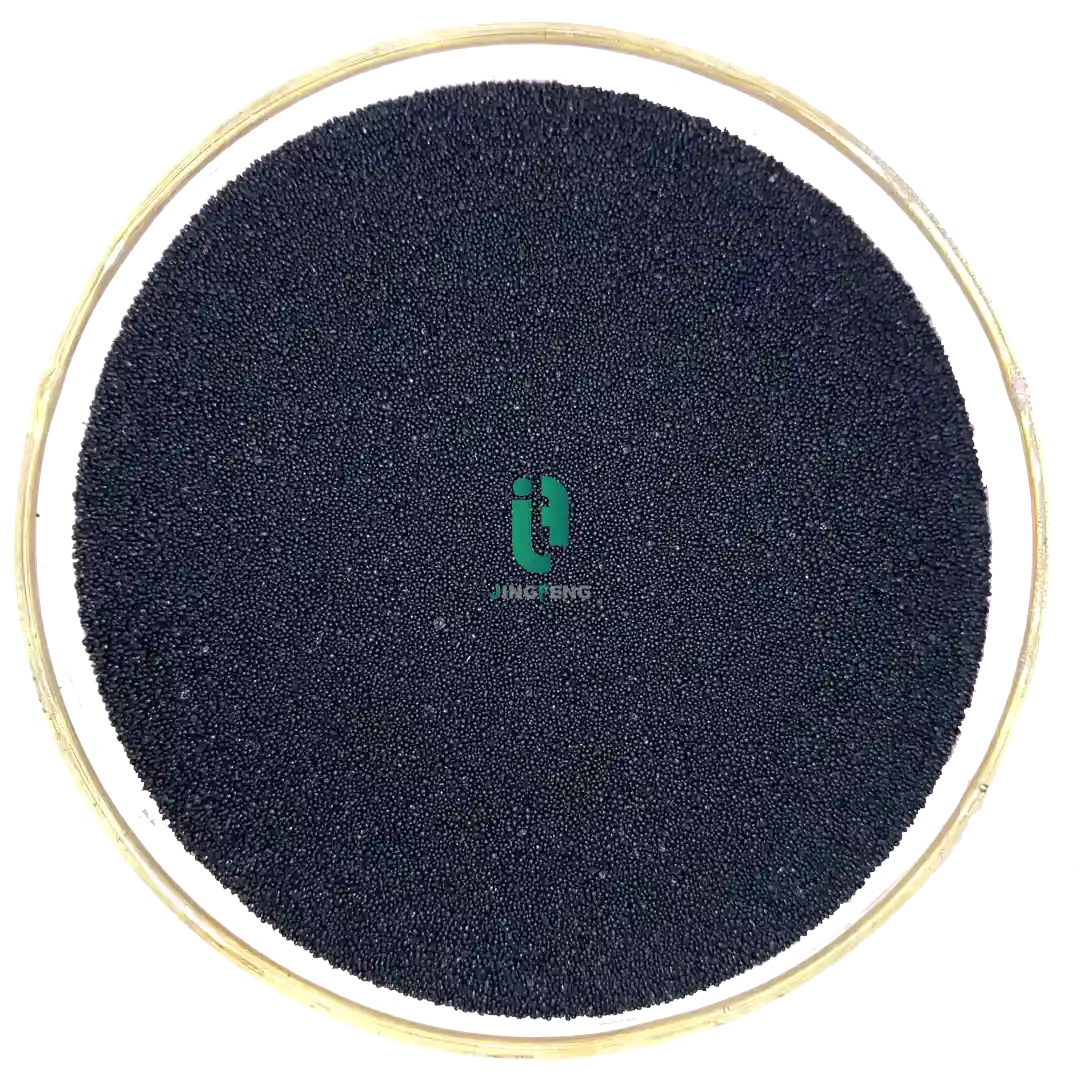
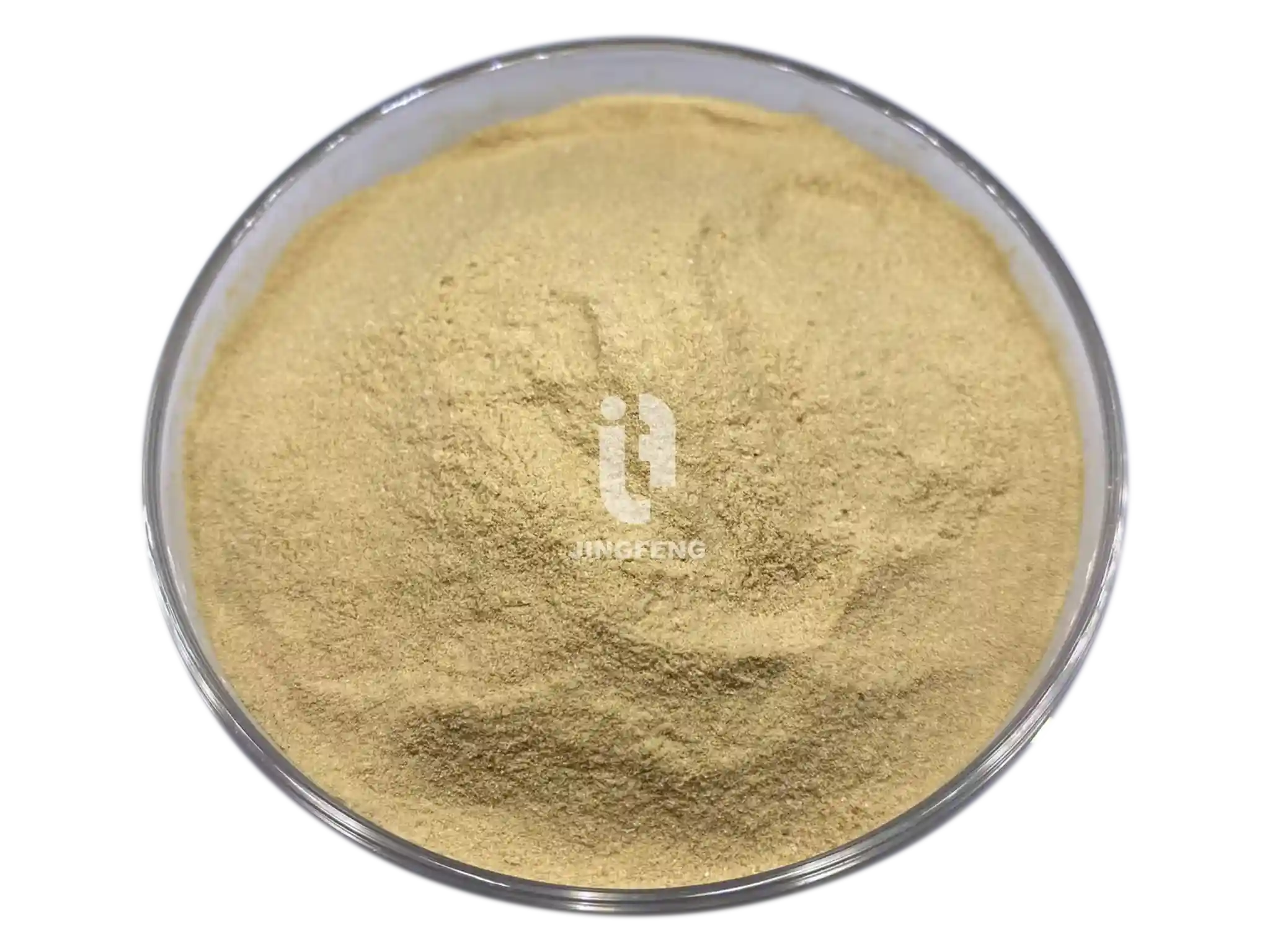
JINGFENG's 25% Seaweed Extract Micro Granule is a premium organic biostimulant produced through controlled enzymatic hydrolysis of fresh Ascophyllum nodosum , followed by spray drying into uniform black micro granules.…
Send Inquiry Download TDS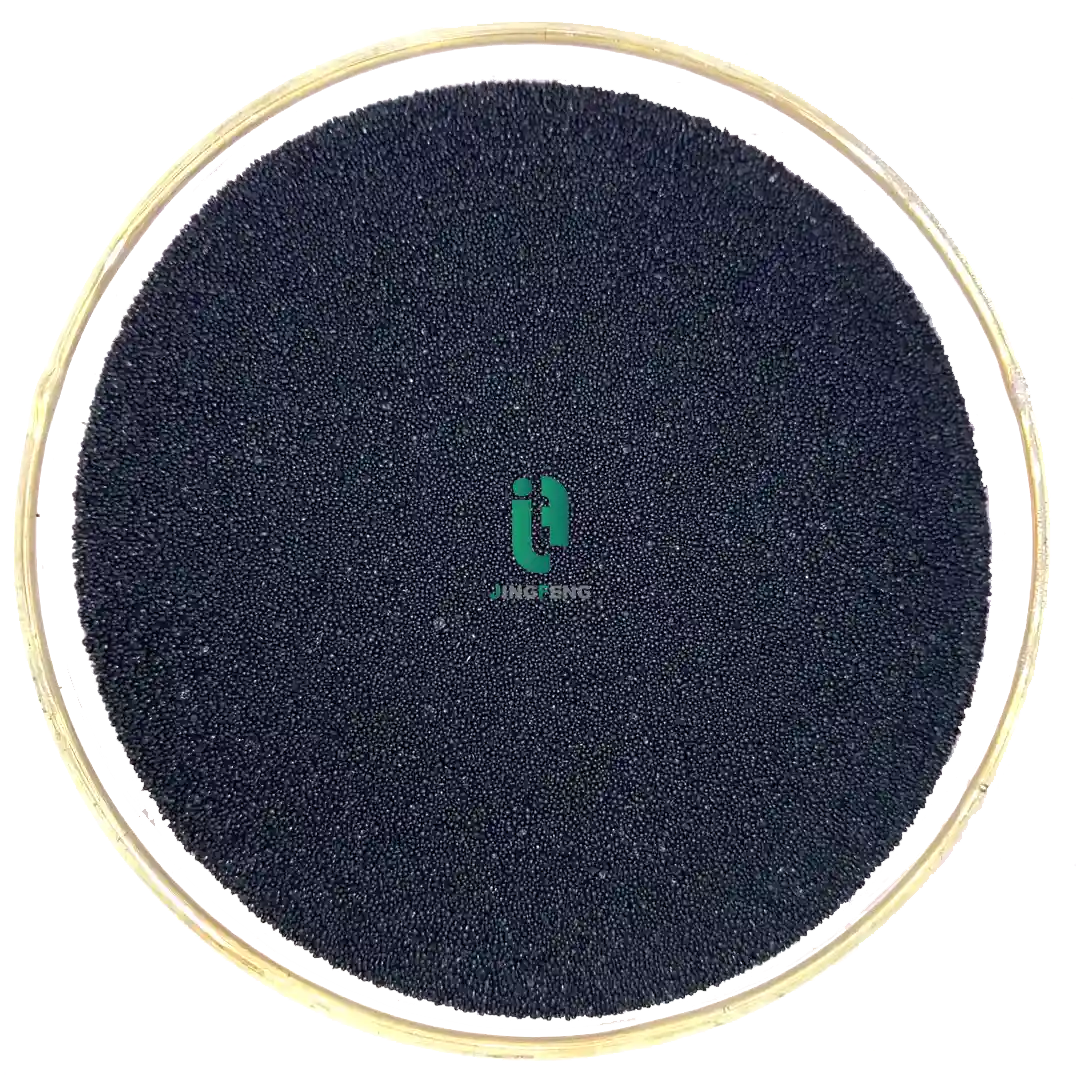
Product Overview
- Polysaccharide Signaling
- Chelation & Nutrient Enhancement
- Hormone Synergy
JINGFENG's 25% Seaweed Extract Micro Granule is a premium organic biostimulant produced through controlled enzymatic hydrolysis of fresh Ascophyllum nodosum , followed by spray drying into uniform black micro granules. This advanced production process preserves the full spectrum of natural bioactive compounds — alginic acid (≥30%), seaweed polysaccharides (≥35%), mannitol, betaine, amino acids, and natural plant growth hormones — in their most biologically active, low-molecular-weight form.
The result is a 100% water soluble micro granule that dissolves instantly without clumping , making it ideal for fertigation systems, foliar application, and NPK bulk blending. Unlike spray-dried chemically extracted seaweed products, our enzymatic process operates at low temperature (40–60°C) and neutral pH, ensuring maximum retention of heat-sensitive bioactive substances.
Sourced from cold-water Ascophyllum nodosum harvested during peak bioactive season, this seaweed biostimulant contains natural stress-response compounds — betaines, mannitols, and phenolic antioxidants — evolved as cryoprotectants against harsh North Atlantic conditions. These compounds provide crops with built-in stress tolerance when applied as foliar or root drench.
With organic matter ≥40%, alginic acid ≥30%, and a balanced N-P-K of 0.8-4.1-20.5, the product functions as a multi-purpose biostimulant and organic-compliant potassium source for high-value crops worldwide.
🌍 Versatile application — fertigation, foliar spray, soil drench, NPK blending raw material
🌿 Fresh Ascophyllum nodosum — cold-water harvested from clean ocean waters
🧪 Enzymatic hydrolysis — low-temperature process preserving natural bioactivity
💧 100% water soluble — instant dissolution, no clumping, no residue
🔬 High active compound content — alginic acid ≥30%, polysaccharides ≥35%
Key Benefits
Polysaccharide Signaling
Seaweed polysaccharides (≥35% in this micro granule product) act as signaling molecules that trigger plant defense and growth pathways. When absorbed through the leaf cuticle or root cell wall, these bioactive fragments activate calcium-dependent protein kinases (CDPKs) and mitogen-activated protein kinase (MAPK) cascades, initiating downstream responses including enhanced root growth, improved nutrient uptake, and stress gene expression. Research has demonstrated that seaweed polysaccharides at 50–200 mg/L increased tomato seedling root length by 35–60% and shoot biomass by 25–40% compared to control. The signaling effect is dose-dependent and crop-specific, with the highest responses observed in solanaceous (tomato, pepper), leafy (lettuce, spinach), and brassica (cabbage, broccoli) crops.
Chelation & Nutrient Enhancement
Alginic acid (≥30% in this product) functions as a natural chelating agent, binding microelements (Fe, Mn, Zn, Cu, B) into plant-available forms that resist leaching and precipitation in soil. This chelation mechanism increases nutrient use efficiency by 20–35%, particularly in alkaline or calcareous soils where micronutrients are typically locked up. In soil, alginic acid also acts as a natural soil conditioner — improving aggregation, water retention, and aeration. Its carboxyl groups provide additional cation exchange capacity (CEC), helping sandy soils retain nutrients and reducing fertilizer waste.
Hormone Synergy
The enzymatic hydrolysis process preserves the natural balance of plant growth hormones present in fresh Ascophyllum nodosum — cytokinins (CTK, promoting cell division and bud activation), gibberellins (GA, driving stem elongation and seed germination), and auxins (IAA, regulating root initiation and apical dominance). Research by Crouch and van Staden (1993) established that seaweed extracts containing all three hormone classes outperform single-hormone applications by 40–80% in field trials. The synergy matters: CTK drives shoot growth, IAA drives root growth, GA bridges the two — and their natural ratio in Ascophyllum nodosum has evolved over millennia to optimize plant response.
Technical Details
| Items | Standard (%w/w) | Results (%w/w) | Test Method |
|---|---|---|---|
| Appearance | Black microgranule | Black microgranule | Visual Observation |
| Solubility in water | 100% w/w | 100% w/w | NY/T 1973-2021 |
| pH | 8–11 | 8–11 | NY/T 1973-2021 |
| Organic Matter | ≥40% w/w | 45.5% w/w | NY/T 1976-2010 |
| Alginic Acid | ≥30% w/w | 32.3% w/w | NY/T 3174-2017 |
| Seaweed Polysaccharides | ≥35% w/w | 35.4% w/w | GB/T 5009 |
| Mannitol | ≥3% w/w | 3.1% w/w | HPLC |
| Amino Acids | ≥1.5% w/w | 1.7% w/w | NY 1429-2007 |
| Betaine | ≤45 ppm w/w | 15 ppm w/w | HPLC-MS / UPLC-MS |
| Nitrogen (N) | ≥0.8% w/w | 0.82% w/w | NY/T 1977-2010 |
| Phosphorus (P₂O₅) | ≥3.5% w/w | 4.1% w/w | NY/T 1977-2010 |
| Potassium (K₂O) | ≥20% w/w | 20.54% w/w | NY/T 1977-2010 |
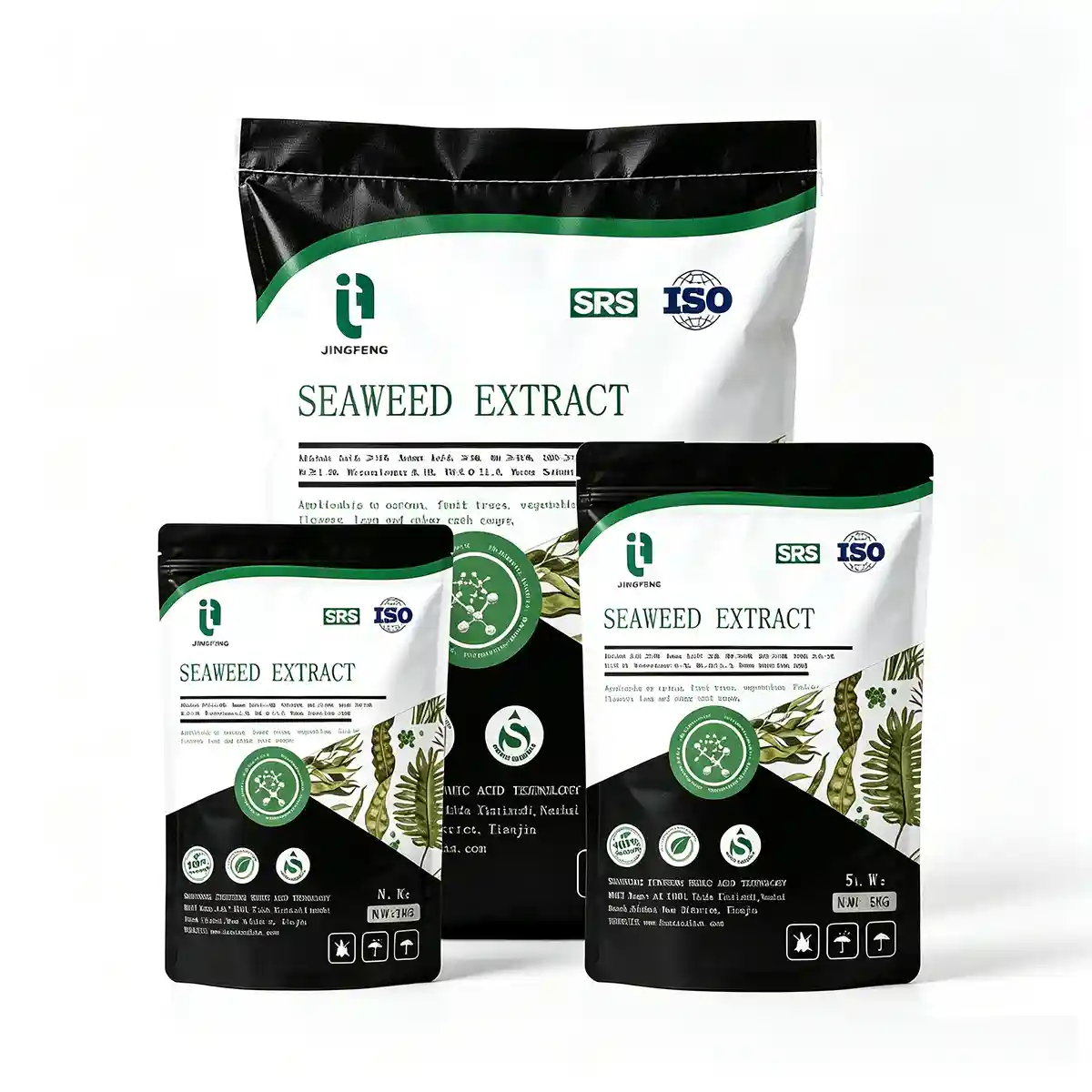
Packaging & Storage
graeme@humate-cn.com
008618920222224
8618920222224
8618920222224