- 1. Feed-Grade Sodium Humate: Safe Addition Rates & Usage in Livestock
- 1.1. What Is Feed-Grade Sodium Humate?
- 1.2. How It Works in the Animal
- 1.3. Safe Addition Rates by Species
- 1.4. Poultry: Growth and Gut Health
- 1.5. Ruminants: Calving, Stress and Conversion
- 1.6. Aquaculture: Fish, Shrimp and Water Quality
- 1.7. Forms and Packaging
- 1.8. Practical Cautions
- 1.9. FAQ
- 1.10. The Bottom Line
Feed-Grade Sodium Humate: Safe Addition Rates & Usage in Livestock
Sodium humate is one of the oldest, best-documented feed additives still in use — and one of the few that does double duty. It improves gut health and growth and binds toxins and heavy metals in the digestive tract. For livestock producers, that combination translates into healthier animals, better feed conversion, and fewer losses from scours and mycotoxins.
This guide covers what feed-grade sodium humate actually does, the safe addition rates for poultry, cattle and aquaculture, and how to use it without overdoing it. Specifications for the 50–65% feed-grade material are on the Sodium Humate (50–65%) product page.
What Is Feed-Grade Sodium Humate?
Sodium humate is the sodium salt of humic acid, extracted and refined into a black shiny flake, crystal or powder. The feed-grade material is supplied in two common strengths:
- 65% sodium humate — humic acid (dry basis) 65% min, water solubility 100%.
- 50% sodium humate — humic acid (dry basis) 50% min, water solubility 90%.
Both are low-moisture (≤15%) and suitable for blending into compound feed or premixes.
How It Works in the Animal
Sodium humate acts through three well-recognized mechanisms:
- Toxin binding. It has the distinct property of absorbing toxins from proteins, toxic residues and various heavy metals in the gut, reducing their uptake into the animal.
- Gut and mucosal support. It helps stabilize the digestive tract lining, which shows up as reduced scouring and better nutrient absorption.
- Growth and conversion. By improving gut function and lowering the toxin load, animals convert feed more efficiently and gain more reliably.
In short: a cleaner gut, a healthier animal, better feed conversion.
Safe Addition Rates by Species
Addition rates vary by species, age and diet. The ranges below are practical starting points used across poultry, ruminant and aquaculture operations; always confirm against your premix formulation and local regulations.
| Species | Typical inclusion | Notes |
|---|---|---|
| Broilers / layers | 2–5 kg per tonne of feed | Split across the ration; higher during stress or post-antibiotic recovery |
| Pigs (grower/finisher) | 3–6 kg per tonne | Supports gut health during transitions |
| Dairy / beef cattle | 10–25 g per head per day (or blended into TMR) | Higher during calving and heat stress |
| Aquaculture (fish/shrimp) | 1–3 kg per tonne of feed, or pond dosing per protocol | Also improves water clarity and binds pond-bottom wastes |
These are starting ranges. Introduce at the low end, observe animal response, and adjust. Do not exceed recommended maxima for the product grade you are using.
Poultry: Growth and Gut Health
In broilers and layers, sodium humate for poultry growth is most often used at 2–5 kg/tonne of finished feed. Producers report steadier weight gain, lower mortality from digestive upsets, and improved litter condition (less ammonia from better nitrogen utilization). During heat stress, disease challenge, or after a mycotoxin event, a temporary step-up in inclusion is common.
Ruminants: Calving, Stress and Conversion
Cattle respond well to 10–25 g per head per day, blended into the total mixed ration or offered via a mineral mix. The biggest wins are seen around calving, weaning and heat waves — periods when gut function and feed intake are under pressure. Cleaner gut function also means better fiber digestion and milk solids.
Aquaculture: Fish, Shrimp and Water Quality
In sodium humate aquaculture use, 1–3 kg per tonne of feed is typical, and the same molecule helps the pond as well as the animal: it binds suspended organic wastes and can improve water clarity, which reduces stress on fish and shrimp. That dual action — animal gut plus pond environment — is why it is a staple in intensive aquaculture.
Forms and Packaging
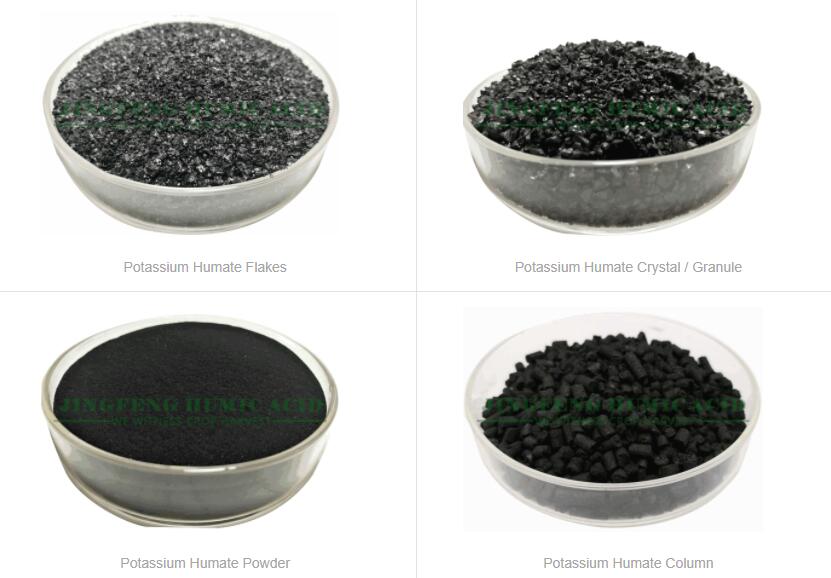
The 50–65% feed-grade material ships as black shiny flake, crystal or powder, packed in 20 kg / 25 kg woven or paper bags with inner liner, and in color-printed PP/PE bags for retail. Choose the particle form that blends best into your existing mill line.
Practical Cautions
- Start low. Introduce at the lower end of the range and watch response before increasing.
- Blend evenly. Poor mixing defeats the benefit; use a premix step for low inclusion rates.
- Mind the grade. 65% and 50% grades are not interchangeable gram-for-gram — adjust by humic-acid content, not by bag weight.
- Regulatory fit. Confirm allowable inclusion levels for your species and market before commercial use.
FAQ
Can I use sodium humate with other feed additives?
Generally yes — it is compatible with most vitamin and mineral premixes. As always, validate new combinations in a small batch first.
Is it a replacement for medication?
No. It supports gut health and binds toxins, but it is a feed additive, not a veterinary drug. Use it as part of a sound health program.
How do I know the rate is right?
Steady gains, lower scour incidence, and stable feed conversion are the signals. If you see no change at the low end after a reasonable period, step up within the safe range.
Does it help water quality in ponds?
Yes — beyond the animal, it binds suspended organic waste and can improve clarity, lowering stress in intensive systems.
The Bottom Line
Feed-grade sodium humate is a low-risk, high-leverage additive: it binds toxins and heavy metals, supports gut health, and improves feed conversion across poultry, cattle and aquaculture. Used at sensible rates — 2–5 kg/tonne for poultry, 10–25 g/head/day for cattle, 1–3 kg/tonne for aquaculture — it pays back through healthier animals and better feed efficiency. See the Sodium Humate (50–65%) product page for full specifications.
Addition rates are practical starting points and should be confirmed against your formulation, species and local regulations.
Related reading: the Sodium Humate product page for specifications, and our overview of sodium humate uses in agriculture for soil and crop applications of the same molecule.