
Home » Extruded Potassium Fulvate Granules Type I
Product Overview
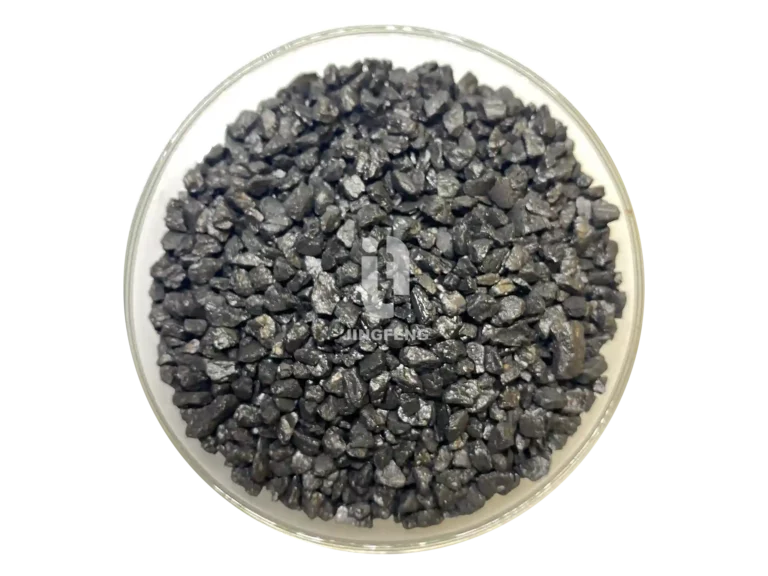
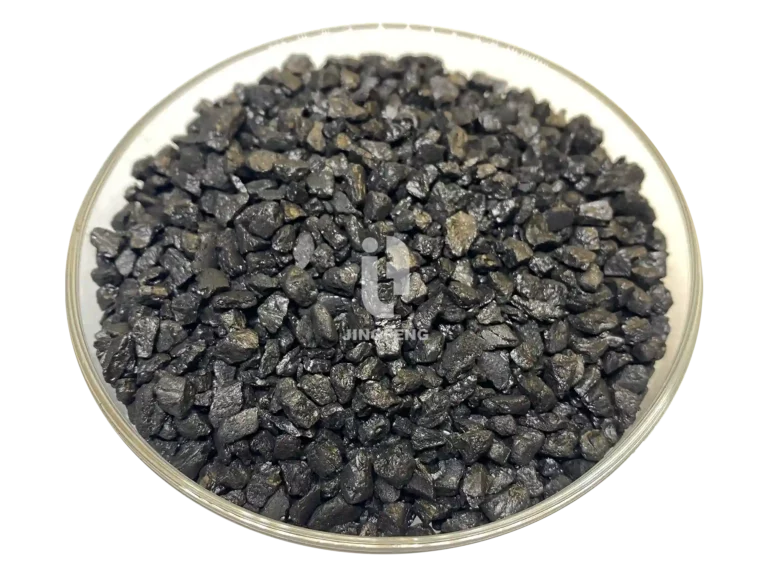
Extruded Potassium Fulvate Granules Type I is a high-purity, water-soluble potassium fulvate granule produced through a controlled hydraulic extrusion process. JINGFENG®‘s extrusion technology compresses fulvic and humic acids into dense, uniform 3–6 mm granules with hardness ≥25N, making the product suitable for direct soil application, fertigation, and blending with compound fertilizers without dust or caking.
Technical Details
| Technical Index | Specification | Test Method1 | Reference Standard |
|---|---|---|---|
| Humic Acid Content (dry basis) | ≥ 50% | Colorimetric / Gravimetric | HG/T 5334-20182 |
| Fulvic Acid Content (dry basis) | ≥ 50% | Colorimetric method | HG/T 5334-20182 |
| Organic Matter Content | ≥ 50% | Walkley-Black / Dry combustion | NY 525-20123 |
| Organic Carbon Content | ≥ 40% | Walkley-Black titration | NY 525-20123 |
| K₂O Content (dry basis) | ≥ 10% | Flame photometry | GB/T 33804-20251 |
| Water Solubility | 100% | Visual dissolution test | ISO 19822 / HPTA / AAPFCO1 |
| Moisture Content | ≤ 12% | Oven drying (105°C, 4h) | GB/T 33804-20251 |
| pH Value (1% aqueous solution) | 9.0 – 10.0 | Potentiometric | GB/T 33804-20251 |
| Granule Size | 3 – 6 mm | Sieve analysis | Internal SOP |
| Granule Hardness | ≥ 25 N | Kahl tester | Internal SOP |
| Appearance | Black uniform granules (no dust) | Visual inspection | — |
| Shelf Life | 36 months | Accelerated aging test | — |
1 GB/T 33804-2025 / ISO 19822 / HPTA / AAPFCO / IHSS Analysis method
2 HG/T 5334-2018 / CDFA / Colorimetric method
3 Chinese national organic matter test method NY 525-2012
Mechanism — How Extruded Potassium Fulvate Works
Fulvic acid at 50–500 mg/L promotes lateral root initiation and root hair density, increasing root surface area for water and nutrient uptake. The IHSS 2018 Review notes that humic substances can increase root biomass by 15–40% depending on application rate and crop. A collaborative study by Northwest A&F University (Zhang et al., 2017) on drought-stressed apple rootstock (Malus hupehensis) confirmed that fulvic acid pretreatment improved photosynthetic rate and water use efficiency by 18–25%.
Potassium fulvate acts as a natural soil conditioner, improving aggregate stability and cation exchange capacity (CEC). Long-term application studies show consistent improvement in soil tilth, water retention, and microbial activity. Inner Mongolia Agricultural University field trials (2020–2021) on saline-alkali soil in the Hetao Irrigation Area confirmed that fulvic acid application increased soil organic matter by 0.3–0.5% over two growing seasons, with significant improvements in soil carbon pool and microbial community structure.
Both fulvic and humic acids enhance plant antioxidant enzyme activity (SOD, CAT, POD), improving tolerance to drought, salinity, and temperature extremes. Field trials on maize in the Tumochuan Plain (Wang & Chen, 2025) demonstrated that combined application of phosphate fertilizer and fulvic acid significantly improved maize drought tolerance and phosphorus use efficiency.
References:
- Chen, Y., et al. (2004). Humic substances: Fulvic acid-metal interactions. Geoderma, 123(1-2), 1-14.
- IHSS (2018). International Humic Substances Society Review on Humic Substance Effects on Plant Growth.
- Wang, L., Chen, Y., et al. (2025). Effects of fulvic acid combined with phosphate fertilizer on maize yield and phosphorus use efficiency. Acta Agronomica Sinica, 51(3).
- Zhang, L., Li, A., et al. (2017). Effects of fulvic acid and glycine betaine pretreatment on physiological characteristics and photosynthesis of Malus hupehensis under drought stress. Acta Botanica Boreali-Occidentalia Sinica, 37(2), 307-314.
- Yang, Y., Liu, J., et al. (2024). Effects of humic acid and different tillage measures on carbon pool and microbial community structure in saline-alkali soil. Crops, 40(1), 157-165.
- Available on request — JINGFENG long-term field trial data, Inner Mongolia, 2019–2024.
Key Benefits
Dual-Acid Synergy
50% fulvic + 50% humic acid delivers both fast-acting (fulvic chelation) and long-lasting (humic soil conditioning) effects in a single granule.
High Mechanical Strength (≥25N)
Extruded granule hardness prevents breakage during bulk transport, mechanical blending, and field application — zero dust, no waste.
100% Water Solubility
No residue, fully dissolves in drip irrigation and foliar spray tanks within minutes — no pipeline clogging.
pH Balanced (9.0–10.0)
Compatible with most NPK, urea, MAP, and SOP blends — no caking or chemical reaction.
Clean Handling
Granule form eliminates dust, improving worker safety and reducing material loss during handling.
Flexible Blending
Compatible with NPK, urea, monoammonium phosphate, and most micronutrients — no separation in mixed fertilizers.
Recommended Applications
Agricultural Crops
Field crops such as wheat, corn, rice, cotton, and oilseeds, soybeans, sugar beet, barley, and so on.
Vegetables
Open-field and greenhouse vegetables including tomatoes, cucumbers, peppers, lettuce, and broccoli.
Fruit Trees
Pome fruits (apple, pear), stone fruits (peach, cherry), citrus, grapes, and berries, Tropical & Subtropical Fruits.
| Crop Category | Representative Crops | Recommended Rate | Application Notes |
|---|---|---|---|
| Field Crops | Wheat, corn, rice, soybean, cotton, oilseed rape | 10–20 kg/ha (base); 5–10 kg/ha (top-dress) | Mix with NPK base fertilizer; top-dress at jointing/flowering stage |
| Vegetables | Tomato, cucumber, pepper, lettuce, broccoli | 15–25 kg/ha (base); 0.5–1 g/L (fertigation) | Greenhouse: increase fertigation frequency; field: band application |
| Fruit Trees | Apple, pear, peach, citrus, grape, berry | 2–3 kg/tree (base); 1–2 kg/tree (top-dress) | Apply at bud break and fruit expansion; broadcast under canopy |
| Economic Crops | Tea, coffee, tobacco, sugarcane, sugar beet | 10–15 kg/ha (base); 5–8 kg/ha (top-dress) | Combine with compound fertilizer; avoid direct contact with seeds |
| Lawn & Turf | Golf course, sports field, landscape turf | 5–10 kg/ha (monthly) | Broadcast evenly; irrigate immediately after application |
| Hydroponics & Seedling | Lettuce, tomato seedling, cucumber, herbs | 50–100 mg/L (continuous) | Pre-dissolve fully; check pH compatibility with A/B tank |
| Application Method | Dilution / Rate | When to Apply | Application Notes |
|---|---|---|---|
| Base Fertilizer (基肥) | 10–20 kg/ha | Before sowing or transplanting | Broadcast uniformly or banded in furrow; mix with top 15-20 cm soil |
| Fertigation (滴灌/水肥一体化) | 0.5–1 g/L (1–2 kg per 1000 L water) | At key growth stages (flowering, fruit set, bulking) | Pre-dissolve in 5x water for 5–10 min; stir before adding to main tank |
| Top-Dressing (追肥) | 5–10 kg/ha | Tillering, jointing, flowering, fruit expansion | Broadcast near root zone; incorporate lightly with irrigation or rainfall |
| Foliar Spray (叶面喷施) | 0.1–0.3 g/L (1–3 g per 10 L water) | Early morning or late afternoon, avoid strong sunlight | Dissolve fully; spray on both sides of leaves; re-apply every 14–21 days |
| Seed Treatment (拌种) | 0.5–1 kg per 100 kg seed | Mix with seeds before sowing | Dissolve in small amount of water; coat seed surface; air-dry before sowing |
| Hydroponic Solution (水培) | 50–100 mg/L (continuous) | Maintain in nutrient solution throughout growth cycle | Check pH compatibility with A/B tank; ensure full dissolution |
| Soil Type | Key Characteristics | Recommended Rate | Application Strategy |
|---|---|---|---|
| Sandy Soil | Low CEC, high leaching, poor water retention | 15–25 kg/ha, split 2–3 applications | Smaller, more frequent doses to compensate for leaching; combine with mulch |
| Loamy Soil | Balanced CEC, good structure, ideal for most crops | 10–20 kg/ha, 1–2 applications | Standard broadcast or banded; ideal for full product benefits |
| Clay Soil | High CEC, compacted, poor drainage, slow nutrient release | 10–15 kg/ha, 2 split applications | Base + top-dress strategy; granule form helps break up compaction |
| Saline-Alkali Soil | High pH (>8.5), high Na⁺, low organic matter, low microbial activity | 20–30 kg/ha, 2–3 split applications | Higher rate needed; combine with organic matter and proper drainage; apply pre-sowing |
| Acidic Soil (Red Soil) | Low pH (<5.5), Al³⁺ toxicity, low base saturation | 10–20 kg/ha, 1–2 applications | Combine with lime or dolomite; pH-balanced product is safe for acid soil |
Why this matters: Different soil types respond differently to humic substances. Sandy soils need more frequent split applications to compensate for leaching; clay soils need base + top-dress to break up compaction; saline-alkali soils need higher rates (20–30 kg/ha) and split timing to manage Na⁺ uptake.
NPK Bulk Blending
Step 1: Match Granule Size (3–6 mm)
Verify that the NPK compound fertilizer and Extruded Potassium Fulvate Granules have matching granule size (both 3–6 mm). Size mismatch is the #1 cause of segregation during transport, handling, and field application.
Step 2: Calculate Blend Ratio (5–15% Fulvate)
Typical blend ratio: 5–15% Extruded Potassium Fulvate in the final blend. For most field crops, 8–10% is the industry-standard starting point. For high-value crops, 12–15%. For maintenance, 5%.
Step 3: Pre-weigh Materials
Use a calibrated platform scale. Weigh NPK and Extruded Potassium Fulvate Granules separately. For 1 MT batch at 10% fulvate: weigh 900 kg NPK + 100 kg Extruded Potassium Fulvate.
Step 4: Mechanical Blending (30–60 sec)
Use a rotary drum blender. Add the heavier NPK first, then the lighter Extruded Potassium Fulvate on top. Blend at low RPM (8–12 RPM) for 30–60 seconds. Avoid over-mixing.
Step 5: Quality Inspection (Visual + Sieve Test)
Visual check — sample 3–5 grab points; blend should show uniform color. Sieve test — pass through 3 mm and 6 mm sieve; size distribution should remain consistent. Tolerance: <5% deviation.
Step 6: Bag & Apply (Standard Equipment)
Package in 25 kg / 50 kg kraft paper bags or 1 MT / 1.25 MT jumbo bags. Apply with centrifugal broadcaster, pneumatic spreader, or seed drill. No special equipment required.
Why this matters: Bulk blending with NPK is the dominant application method for granular humic/fulvic products globally — it requires no dissolution, no special equipment, and no infrastructure investment beyond a standard fertilizer blender. Extruded granules flow freely, blend uniformly, and apply with conventional spreaders, saving labor, time, and capital cost compared to liquid humic acid products.
Note: Pre-dissolution in water is not recommended for this product. Unlike powder humic acid or potassium humate flakes, the extruded granule form is engineered for dry bulk blending. If fertigation is required, use our Mineral Source Potassium Fulvate Flakes or Bio Fulvic Acid Powder products instead.
Packaging & Storage
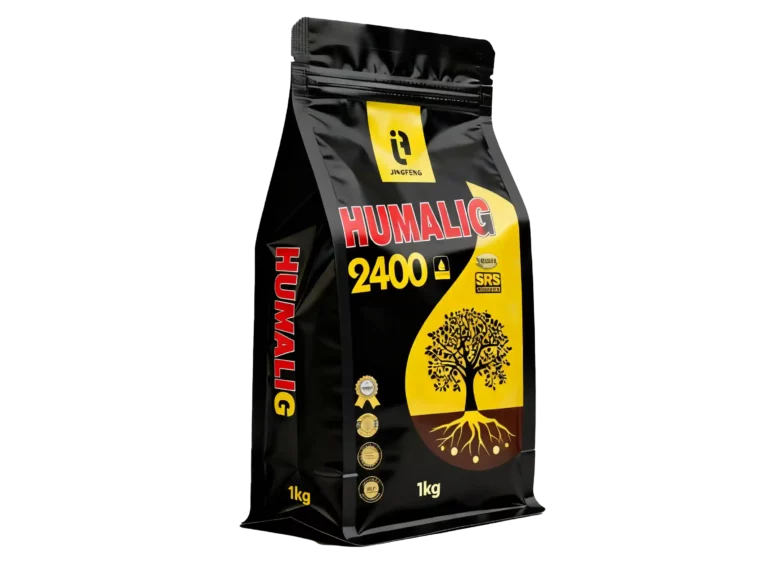
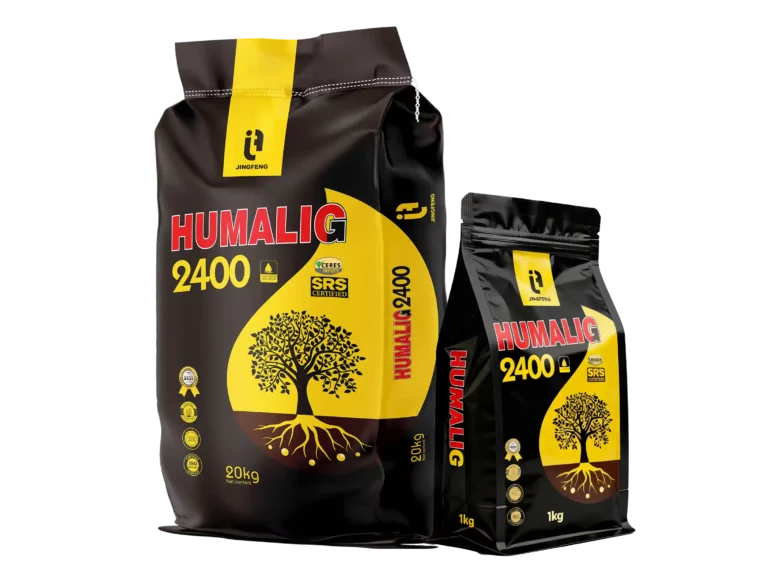
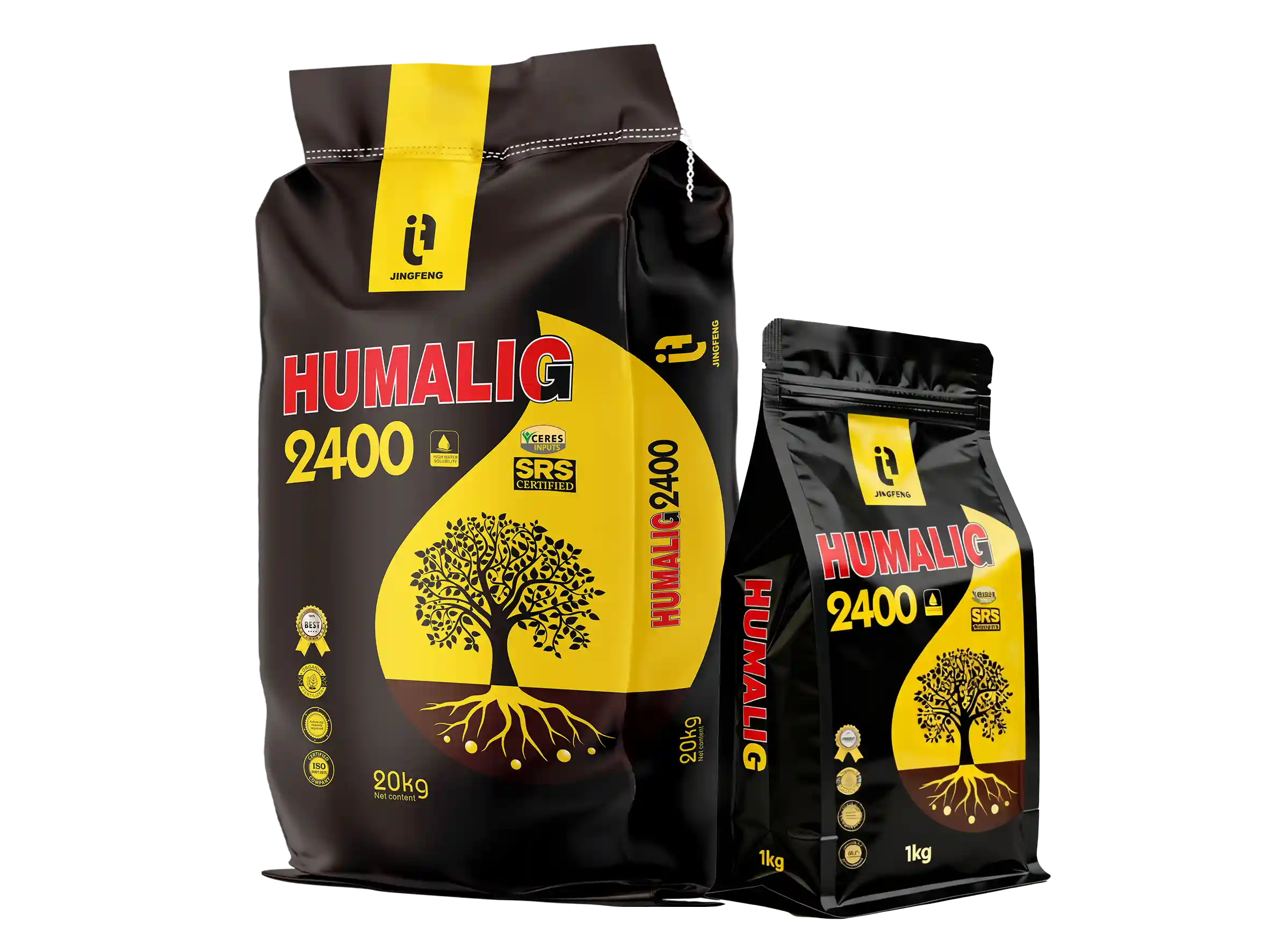
We offer a range of standard packaging solutions: 1kg, 5kg, 10kg, 20kg bags, 25kg bags, jumbo bags.Custom packaging services are also available. Our team will provide tailored recommendations based on your specific requirements to ensure proper storage and transportation, maintaining product integrity throughout the process.
1kg bag
10kg 20kg 25kg bag
jumbo ton bag
OEM bags/box
Storage Instructions:
- Store in a cool, dry, and well-ventilated warehouse (5–35°C, relative humidity ≤75%)
- Seal tightly after use to prevent moisture absorption and caking
- Avoid direct sunlight and heavy pressure (prevent crushing into powder)
- Keep away from strong acids and oxidizing agents
- Shelf life: 36 months in original sealed packaging
Certificate
- CERES (Confirmationfor Materials Used in Organic Agriculture)
- REACH (Green chemical innovation, permitted in the EU)
- ISO9001 / ISO14001 / ISO22000
- Heavy Metal Test Report from ISO certified lab
Safety Data Sheet / Technical Data Sheet
- MSDS (Material Safety Data Sheet) — handling, storage, safety
- TDS (Technical Data Sheet) — full specifications, application methods
- COA (Certificate of Analysis) — Latest tested batch quality data
Successful Cases
Institution: Inner Mongolia Agricultural University, College of Resources and Environment
Lead Researcher: Prof. Yang Chen (陈杨 教授)
Publication: Acta Agronomica Sinica, 2025, 51(3)
Source: http://journals.caass.org.cn/nxxb/CN/10.11923/j.issn.2095-4050.cjas2025-0106
Institution: Shandong Tai’an Agricultural Technology Extension Center (collaborative trial site: Yanchang County, Yan’an)
Lead Researcher: Huang Jian (黄剑), Cui Jing (崔静)
Publication: Chinese Agricultural Science Bulletin, 2025, 41(8): 63-68
Source: http://journals.caass.org.cn/zgnxtb/CN/10.11924/j.issn.1000-6850.casb2024-0518
Institution: Inner Mongolia Agricultural University, College of Agriculture
Lead Researcher: Prof. Liu Jinghui (刘景辉 教授)
Publication: Crops, 2024, 40(1): 157-165
Source: http://zwzz.chinacrops.org/article/2024/1001-7283/1001-7283-40-1-157.shtml
Frequently Asked Questions
Q1: What is the difference between Type I and Type II Potassium Fulvate Granules?
Type I uses a standard 3–6 mm extrusion die with hardness ≥25N, optimized for direct soil application and fertigation. Type II uses a smaller 1–3 mm die often blended with micronutrients (Zn, Fe, B) for foliar and high-value horticultural applications. For most field crops, orchards, and vegetables, Type I is the recommended choice.
Q2: Is this product suitable for organic farming?
Yes. The base product is derived from natural Leonardite humic acid and is manufactured without chemical synthesis. JINGFENG holds CERES Organic Certification, which confirms suitability for organic agriculture in EU, US, and major Asian markets. Additional certifications (OMRI, ECOCERT, JAS) are available on request for specific market requirements.
Q3: Is the product compatible with drip irrigation systems?
Yes. With 100% water solubility and 3–6 mm uniform granule size, Extruded Potassium Fulvate Granules Type I fully dissolves in fertigation tanks. For best results, pre-dissolve in a small volume of water (5x dilution, 5-10 min stir) before adding to the main fertigation tank. The pH-balanced (9.0–10.0) formulation is compatible with most NPK, urea, MAP, and SOP solutions without precipitation.
Q4: What is the recommended application rate for tomatoes?
For drip-irrigated tomatoes, apply 15–25 kg/ha as base fertilizer before transplanting, then supplement with 0.5–1 g/L fertigation at flowering and fruit-set stages (repeat every 14–21 days). For soil-applied field tomatoes, broadcast 20–25 kg/ha and mix into the top 15-20 cm soil before transplanting. Total seasonal application should not exceed 60 kg/ha to avoid salt accumulation in greenhouse conditions.
Q5: Can this product be mixed with calcium nitrate?
Not recommended for direct tank mixing. Fulvic acid can react with Ca²⁺ to form insoluble calcium fulvate, reducing efficacy of both products. If both are needed, apply separately with at least 3-5 days interval, or use chelated calcium (EDTA-Ca) instead of calcium nitrate.
Q6: What is the shelf life and how should it be stored?
36 months when stored in original sealed packaging in a cool, dry, and well-ventilated warehouse (5–35°C, relative humidity ≤75%). After opening, reseal the bag tightly to prevent moisture absorption. Avoid direct sunlight and heavy pressure (prevent crushing into powder). Keep away from strong acids and oxidizing agents.
Q7: Do you offer OEM/ODM services?
Yes. We customize fulvic-to-humic ratio (e.g., 60/40, 70/30), granule size (1-6 mm), K₂O content (8-15%), color, and packaging. Minimum order quantity for OEM: 5 MT. Lead time: 15–25 days after artwork confirmation. We support both pure OEM (your brand only) and technical endorsement (JINGFENG + your brand).
Q8: How do you ensure batch-to-batch consistency?
Every production batch undergoes in-house QC testing (fulvic, humic, K₂O, pH, moisture, hardness, granule size) and is matched against reference standards. COA is issued per batch with traceable batch numbers. Random third-party audits are conducted by SGS / Bureau Veritas / TUV on a quarterly basis. Batch-to-batch variation for key parameters (humic acid, fulvic acid, K₂O) is maintained within ±2%.
Q9: What is the lead time for a 20ft FCL order?
For stock specifications (Type I standard), 7–10 days after order confirmation. For custom specifications, 15–20 days. Shipping time depends on destination port — typically 25–40 days by sea to most major ports. Air shipping available for urgent orders (3–7 days).
Q10: Can I get a free sample before placing a bulk order?
Yes. We provide 500g–1kg free samples for distributor evaluation and field trial. Shipping cost is borne by the receiver (DHL/FedEx, 3-7 days worldwide). Contact us via the COA / Sample Request button on this page with your full address and intended application.
graeme@humate-cn.com
008618920222224
8618920222224
8618920222224