- 1. 1. Core Principle: Always Follow the “Product Label” First
- 2. 2. Form-Specific Application Guidelines (General References, Adjust per Product Instructions)
- 2.1. Granular Humate Lawn Conditioners (Ideal for Soil Tilling, Pre-Seeding Amendment)
- 2.2. Liquid Humate Conditioners (Suitable for Foliar Spraying, Root Feeding During Growth)
- 3. 3. Key Factors for Rate Adjustment
- 3.1. Soil Organic Matter Content
- 3.2. Lawn Growth Stage
- 3.3. Severity of Lawn Issues
- 4. 4. Important Notes (Keys to Avoid Rate Mismanagement)
The application rate of humate lawn conditioners must be determined based on three core factors: product type (granular/liquid), lawn area, and soil conditions (e.g., compaction level, organic matter content). Critically, you must always prioritize following the specific product’s instructions—different brands vary significantly in humic acid purity, concentration, and thus recommended usage amounts. Below is a detailed guide on rate control principles, form-specific application guidelines, and key considerations.

1. Core Principle: Always Follow the “Product Label” First
Humate lawn conditioners differ drastically across brands in terms of active humic acid content (e.g., 30%, 50%, 70%), carrier ingredients (e.g., with or without gypsum, trace elements), and physical form (granular/liquid), leading to potential multi-fold differences in application rates.
- For example: A high-purity liquid humate (60% active content) might require 500ml diluted per 100m² for spraying, while a granular conditioner (30% active content with gypsum carrier) could need 2-3kg per 100m² for broadcasting .
- Key Action: Before use, carefully read the “Recommended Application Rate” on the product packaging or instructions, and convert it based on your lawn area (e.g., if labeled “200 lbs per acre,” convert to approximately 225g per m²).
2. Form-Specific Application Guidelines (General References, Adjust per Product Instructions)
Below are basic application rate ranges for common humate forms (granular/liquid), suitable for typical residential lawns (cool-season grasses like Kentucky bluegrass, warm-season grasses like Bermuda grass).

Granular Humate Lawn Conditioners (Ideal for Soil Tilling, Pre-Seeding Amendment)
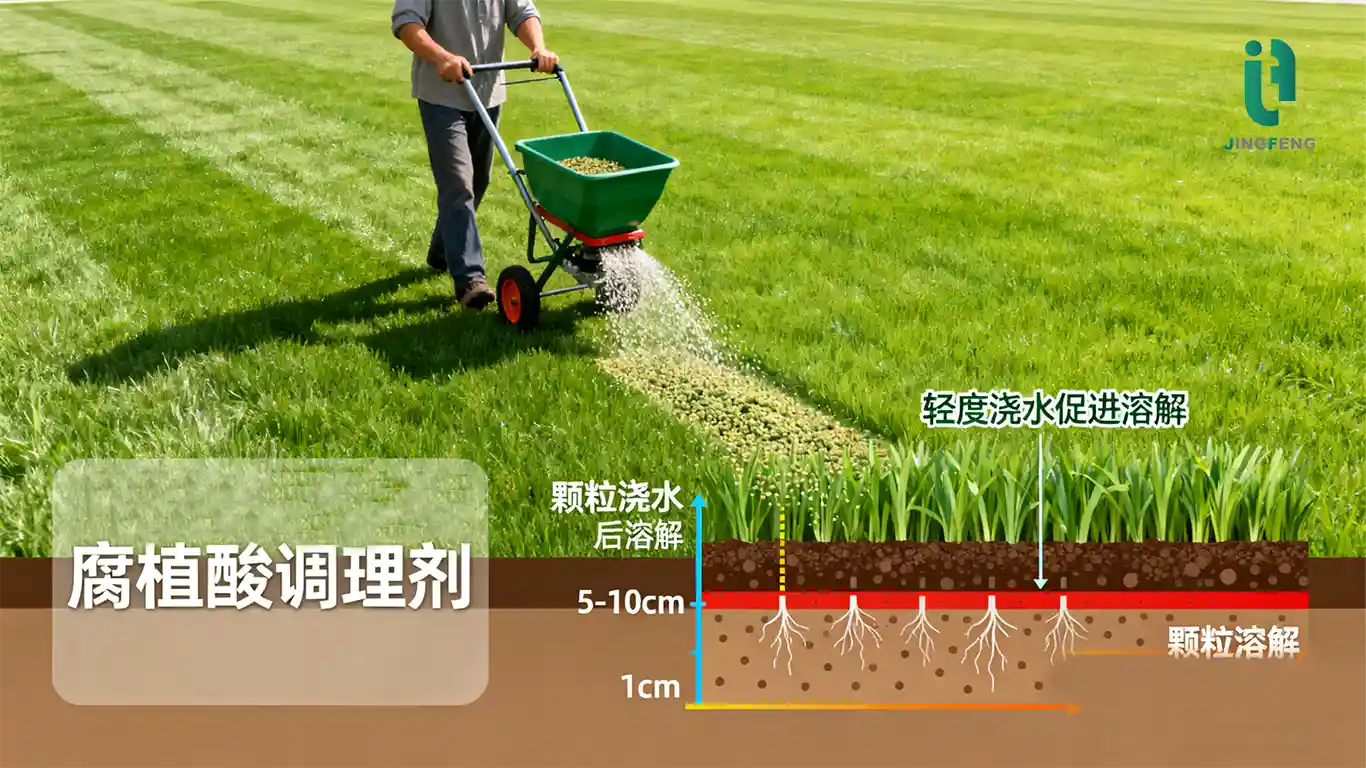
Granular formulations work through soil penetration and are suitable for large-area broadcasting or furrow application, with rates tied to soil improvement goals.
| Application Scenario | Active Humic Acid Content (Reference) | Per m² (General Range) | Per 100m² (General Range) |
| Pre-seeding for new lawns (soil amendment) | 30%-50% | 20-30g | 2-3kg |
| Routine maintenance for established lawns (soil loosening) | 30%-50% | 10-15g | 1-1.5kg |
| Severely compacted areas (targeted amendment) | 40%-60% | 30-40g | 3-4kg |
- Application Method: Use a broadcast spreader for even distribution (avoid localized accumulation). Lightly water the lawn after application to help granules dissolve and penetrate to the root zone (5-10cm soil depth) .
- Product Reference: For established turf, Live Earth Products’ granular humate recommends 15-25 lbs per 1,000 sq. ft., with 1-2 annual applications .

Liquid Humate Conditioners (Suitable for Foliar Spraying, Root Feeding During Growth)
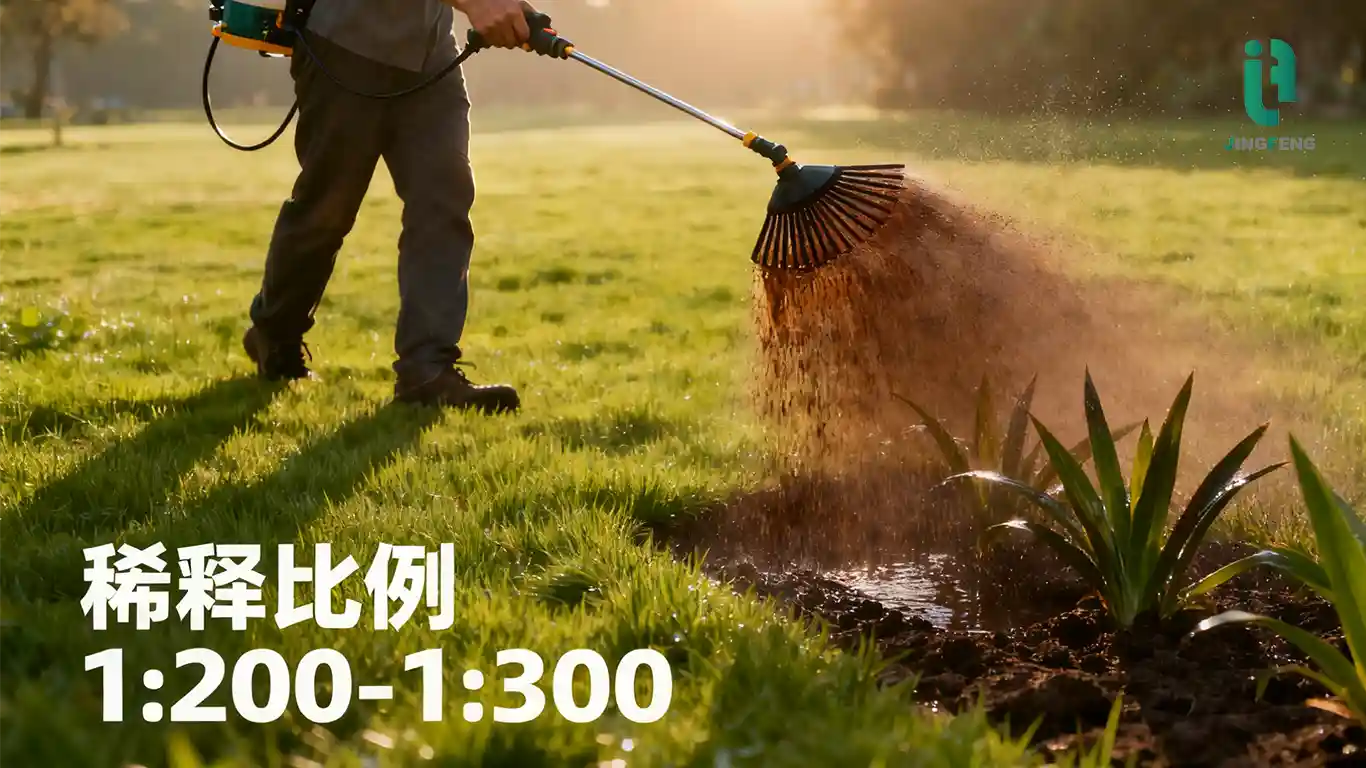
Liquid formulations are fast-absorbing and require dilution (to avoid leaf/root burn). Application rates are directly linked to dilution ratios, making them ideal for rapid humic acid supplementation and enhanced nutrient uptake .
| Application Scenario | Active Humic Acid Content (Reference) | Dilution Ratio (Water:Product) | Per m² (Diluted Solution) | Per 100m² (Diluted Solution) |
| Routine maintenance for established lawns (growing season) | 50%-70% (concentrate) | 1:200-1:300 | 200-300ml | 20-30L |
| Lawn yellowing/weak roots (emergency supplementation) | 50%-70% (concentrate) | 1:300-1:400 | 150-200ml | 15-20L |
| Post-germination for new lawns (seedling stage) | 40%-60% (mild formula) | 1:400-1:500 | 100-150ml | 10-15L |
- Application Method: Use a backpack sprayer with a “fan nozzle” (avoid direct leaf exposure). Apply in early morning or evening (to reduce evaporation), focusing on the undersides of leaves and root-zone soil surface .
- Product Reference: Standard liquid humate for lawns typically recommends 16 ounces per 1,000 square feet .
3. Key Factors for Rate Adjustment
For special lawn or soil conditions, adjust rates within the general range to avoid “ineffectiveness from under-application” or “waste/burn from over-application”:
Soil Organic Matter Content
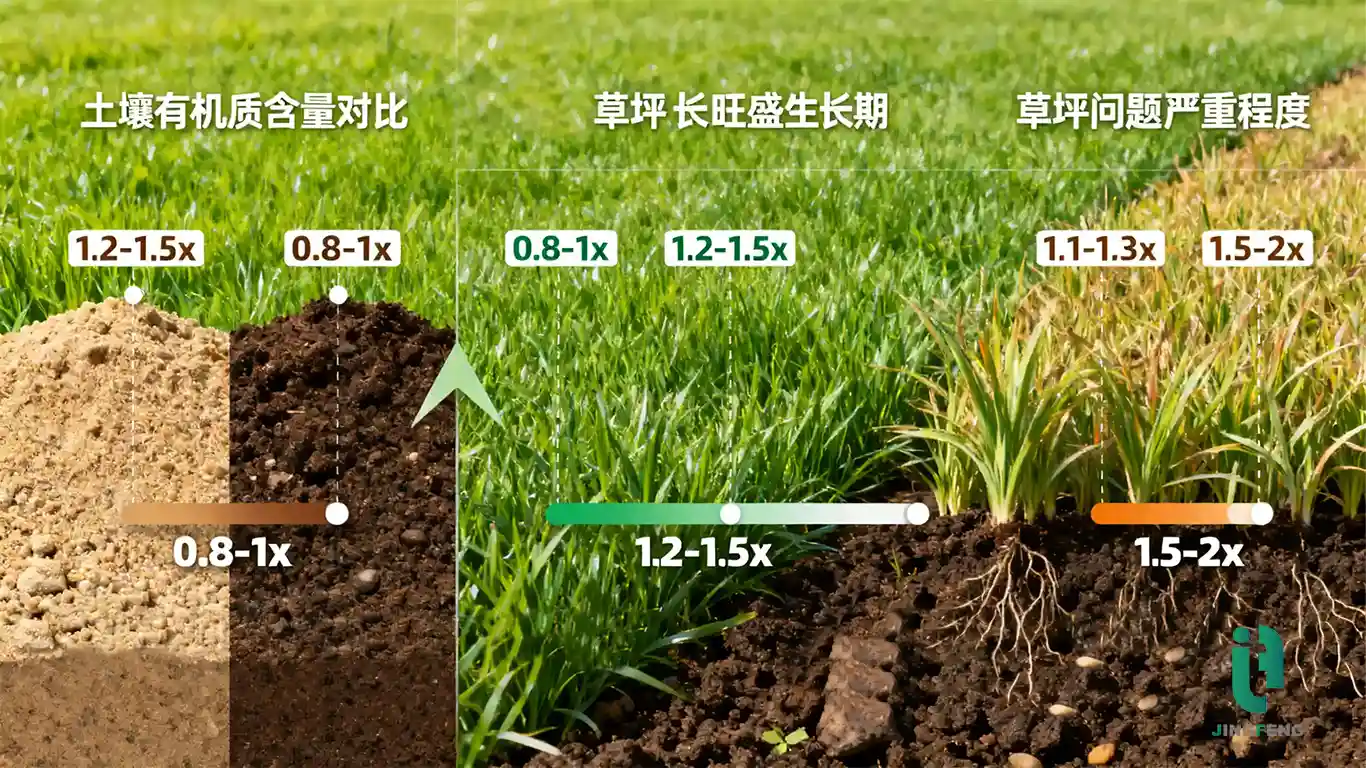
- Poor, sandy soil (organic matter <1%): Increase to 1.2-1.5x the recommended rate to gradually boost soil organic matter .
- Fertile loam (organic matter >3%): Use 0.8-1x the recommended rate to prevent excessive microbial activity that competes for nutrients.
Lawn Growth Stage
- Dormant period (e.g., cool-season grasses in winter, warm-season grasses in winter): Discontinue application, as weak grass absorption may cause component accumulation.
- Vigorous growth period (e.g., cool-season grasses in spring/fall, warm-season grasses in summer): Apply at the recommended rate, ideally paired with NPK fertilizers for enhanced results .
Severity of Lawn Issues
- Mild yellowing/light compaction: Apply at 1x the recommended rate.
- Large-area wilting/severe compaction (shallow roots only): Apply 1.2x the recommended rate initially, then reapply at 0.5x after 15-20 days to avoid root irritation from one-time over-application.

4. Important Notes (Keys to Avoid Rate Mismanagement)
- “Frequent Small Doses” Outperform “One-Time Overdose: Humate is an organic amendment that takes time to work. Over-application does not accelerate results but may cause soil salt accumulation (especially sodium/potassium humate products) . Splitting the recommended rate into 2 applications (15 days apart) is safer and more effective.
- Synergistic Use with Fertilizers: When used with NPK fertilizers, reduce humate rates by 20%-30%—humic acid enhances fertilizer absorption, eliminating waste .
- Monitor Lawn Response: Within 3-7 days post-application, vibrant green leaves and stronger root anchorage indicate proper rates. If leaf tip browning or aggravated yellowing occurs, immediately water to dilute and reduce rates in subsequent applications.
WRITTEN BY JFHA-JJW