In the pursuit of high-yield, high-quality, and sustainable modern agriculture, efficiently and precisely supplementing crop nutrition is a primary concern for every grower. As root-zone fertilization faces challenges like efficiency bottlenecks and soil degradation, foliar feeding, particularly with Amino Acid Foliar Fertilizer, has emerged as a key tool for enhancing crop health and quality, offering a unique set of advantages.

As a company specializing in high-quality humic acid, amino acid, and seaweed extract raw materials, along with custom fertilizer solutions, we believe in understanding the ‘why’ behind the ‘what’. This article delves into the science, core benefits, and optimal application strategies behind amino acid foliar fertilizers, revealing the secrets of this “precision nutrition” for crops.

1. What is Amino Acid Foliar Fertilizer? Beyond Feeding, It’s About Nourishing.

Amino acid liquid fertilizer

In simple terms, an amino acid foliar fertilizer is a formulation where active amino acids are the primary components, designed for direct absorption and utilization by the plant through its leaf surface.

But its essence goes far deeper. Unlike traditional inorganic nitrogen fertilizers (like urea or ammonium nitrate), amino acids are the fundamental building blocks of proteins and are central to all life. Providing amino acids directly to the plant bypasses the complex, energy-intensive process within the plant where inorganic nitrogen is converted into amino acids. This represents a leap from mere feeding to intelligent nourishment.

  • Source & Production Process:High-quality amino acids are primarily derived from animal or plant protein (e.g., leather waste, soybean meal, fish protein) through hydrolysis or enzymatic digestion. Among these, the enzymatic process is preferred for producing premium amino acid liquid fertilizers because it operates under mild conditions, preserving the natural structure of the amino acids (especially the L-form, which has the highest biological activity) and preventing the introduction of harmful substances like chlorides or heavy metals.

2. The Science Decoded: How Amino Acid Foliar Fertilizers Precisely Tackle Crop Challenges

Amino acids play multiple, scientifically precise roles within the plant.

  1. Ultra-Fast Nutritional Supplementation
    During stress conditions (waterlogging, frost, herbicide injury), root damage, or critical growth stages, crops often signal “transient hunger.” Their weakened root systems cannot meet the demands of explosive growth.
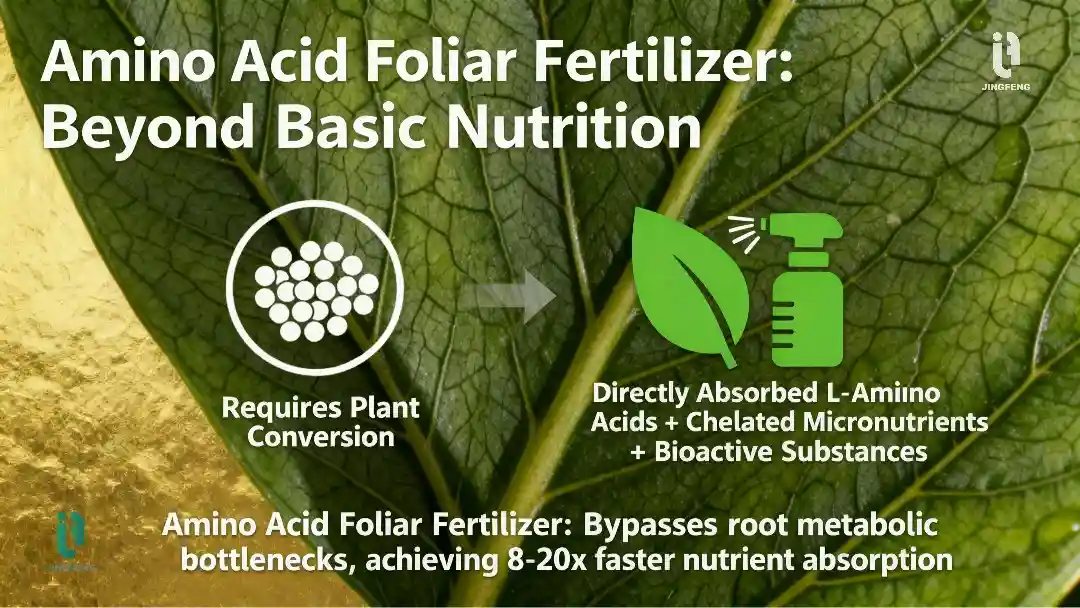
    Amino acid foliar fertilizers deliver pre-assembled nutritional modulesdirectly into the cells via stomata and the leaf cuticle, with an absorption rate 8 to 20 times fasterthan root uptake. This is akin to providing an intravenous glucose drip to an athlete in exhaustion, rapidly restoring plant vigor and alleviating nutrient deficiency symptoms.
  2. Powerful Chelation (Complexation) Boosts Micronutrient Efficiency
    The amino acid molecule contains both an amino group (-NH₂) and a carboxyl group (-COOH). These functional groups can stably bind with secondary and micronutrient ions like Calcium (Ca), Magnesium (Mg), Iron (Fe), Zinc (Zn), Manganese (Mn), and Copper (Cu), forming “amino acid-micronutrient” chelates.
    These chelates are stable, low molecular weight complexesthat are easily absorbed by the leaf and transported within the plant. They prevent these vital elements from being locked up, precipitated, or antagonized in the soil or plant tissues, dramatically increasing their bioavailability—a significant advantage over using inorganic micronutrients alone.
  3. Physiological Activators: Unleashing the Crop’s Inner Potential
    Amino acids are direct precursors to phytohormones and enzymes.
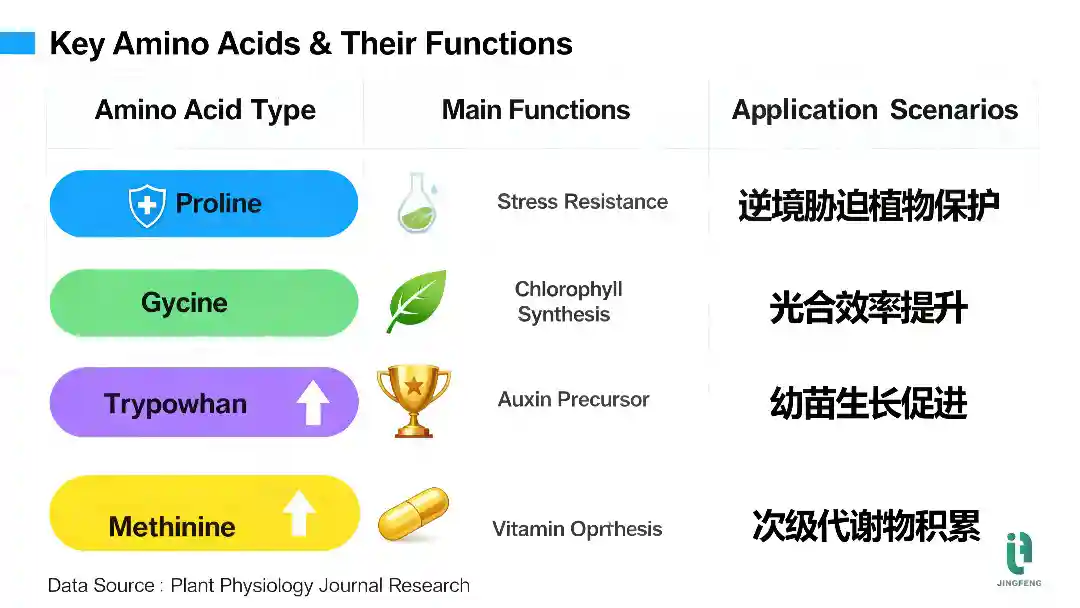
  • Proline:Significantly enhances stress tolerance (drought, salinity, low temperature) by helping cells maintain osmotic balance and protecting macromolecular structures.
  • Glycine & Glutamic Acid:Key participants in chlorophyll synthesis, effectively promoting greener, thicker leaves and enhancing photosynthesis.
  • Tryptophan:A direct precursor to the synthesis of Auxin (IAA), stimulating root development and cell division.
  • Arginine & Methionine:Closely linked to the synthesis of various vitamins and anthocyanins, contributing to improved fruit quality and coloration.
  1. Enhanced Stress Resistance: Fortifying the “Immune System”
    Under abiotic stresses like drought, flooding, temperature extremes, or pest pressure, plants expend immense energy to cope. The external application of amino acids provides a direct source of energy and carbon skeletons, reducing the metabolic cost of internal amino acid synthesis. This allows the plant to redirect its resources toward building defense mechanisms, thereby strengthening its resilience and recovery capacity.

3. Why Choose Our Solutions? The Synergy of High-Quality Raw Materials

The market is flooded with foliar products, but their efficacy varies widely. The core differentiators lie in the source and purity of the raw materials and the scientific basis of the formulation.

  1. We Provide Highly Active, Full-Spectrum Amino Acids
    We employ advanced enzymatic hydrolysis to extract amino acids from premium natural sources, ensuring our products feature:
  • High Percentage of L-Amino Acids:This is the only configuration directly utilized by plants, offering far greater bioactivity than the D-form amino acids produced by chemical hydrolysis.
  • Comprehensive Amino Acid Profile (18+ types):Different amino acids have distinct functions; a full-spectrum supply meets the plant’s comprehensive physiological needs, avoiding “nutritional shortfalls.”
  • Small Molecular Weight & Free of Harmful Substances:Small molecular peptides and free amino acids are more readily absorbed, and our products are free from chlorides, heavy metals, and other substances harmful to crops and soil.
  1. “Amino Acid +” Synergistic Formulas: The Art of 1+1>2
    Single components have their limits. Based on a deep understanding of plant physiology, we have developed powerful synergistic blends:
  • Amino Acids + Seaweed Extract:Seaweed extract is rich in natural plant growth regulators (cytokinins, auxins), betaines, and polysaccharides. Combining them creates a “powerhouse” effect. The seaweed extract further stimulates the plant’s innate potential, widening stomatal openings to facilitate the absorption and translocation of amino acids. Simultaneously, its polysaccharides improve the spread and adhesion of the spray solution on the leaf surface. Together, they deliver compounded effects in promoting absorption, stress resistance, root vigor, and yield.
  • Amino Acids + Humic Acid:Humic acid acts as a soil “conditioner” and nutrient “mobilizer.” While in foliar applications we focus more on its physiological activity, when combined with amino acids, they form highly active complexes that jointly regulate stomatal opening/closing, enhance enzyme activity, and improve fruit quality. This combination is particularly effective for boosting overall crop vitality and preventing premature senescence.

4. Scientific Application for Maximum Efficacy

Even the best products require correct application. Here are the key guidelines for using amino acid foliar fertilizers:

  • Key Application Stages:
  • Bud Break & Leaf Expansion:To supplement nutrition and promote rapid leaf development.
  • Flower Bud Differentiation & Pre-Bloom:To build energy reserves for reproductive growth and improve fruit set.
  • Fruit Enlargement Stage:To support uniform fruit expansion and reduce physiological fruit drop.
  • Color Change / Pre-Maturity Stage:To enhance sugar and dry matter accumulation, improving color and flavor.
  • Pre- and Post-Stress Events:To aid rapid recovery after frost, waterlogging, or chemical damage.
  • Timing and Weather:
  • Apply on windless or calm days, either before 10 a.m.or after 4 p.m., to avoid rapid evaporation due to intense sunlight.
  • Re-apply if rainfall occurs within 4 hoursof application.
  • Optimal absorption occurs at temperatures between 18-25°C (64-77°F).
  • Application Technique:
  • Thorough Coverage:Focus on spraying the underside of leaves, where the majority of stomata are located, ensuring better absorption.
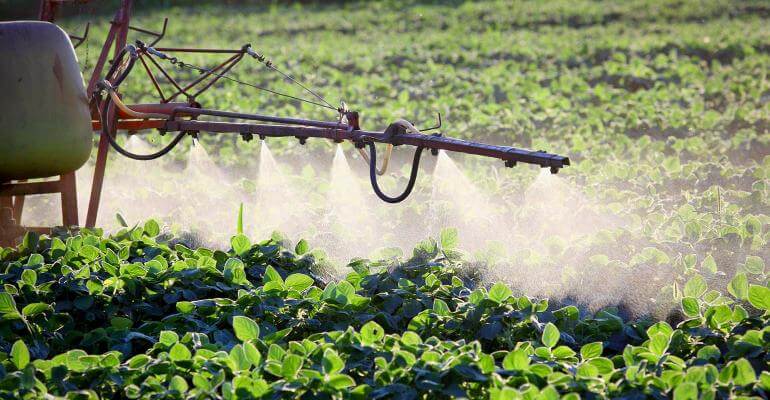
  • Fine Mist:Use a sprayer that produces a fine mist for even coverage over the leaf surface.
  • Mix Fresh:When tank-mixing with pesticides or other agents, always conduct a jar test first to avoid precipitation or flocculation.

Conclusion: Investing in “Precision Health” for Your Crops

Amino acid foliar fertilizers are not a panacea, but they represent a critical component in the transition from “extensive management” to “precision control” in modern agriculture. They are a necessary supplement and upgrade to root-zone fertilization, serving as both an “energy drink” and an “immune booster” during a crop’s most critical growth phases.

Choosing a highly active, scientifically balanced amino acid foliar fertilizer is a solid investment in the health, yield, and quality of your crops. We are committed to providing you not only with high-quality humic acid, amino acid, and seaweed extract raw materials but also with tailored, full-cycle nutritional solutions based on these core components.

Let’s work together. Through scientific nutrient management, we can unlock the innate potential within every plant and stride forward into a more productive, high-quality, and sustainable agricultural future.

Disclaimer: This article is compiled based on publicly available agricultural science literature and research for knowledge dissemination purposes. Specific application results may vary due to crop type, regional environment, and management practices. We recommend conducting small-scale trials or consulting with a professional agronomist prior to full-scale use.

WRITTEN BY JFHA-ZTT

Leave a Reply

Your email address will not be published. Required fields are marked *